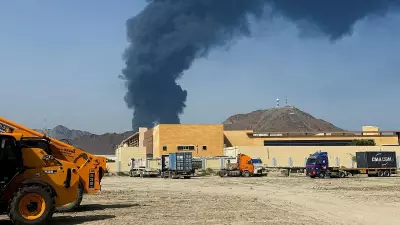
In a significant counter-terrorism operation, the United States military has conducted airstrikes targeting militants affiliated with the Islamic State group in northeastern Nigeria. This action highlights the persistent threat posed by jihadist organizations in the region, specifically the Islamic State West Africa Province (ISWAP).
The US Military Operation in Nigeria
The airstrikes, confirmed by US officials, were carried out against fighters belonging to the Islamic State in West Africa. The operation targeted their positions in Nigeria's volatile northeast, an area long plagued by extremist violence. While specific casualty figures from the recent strikes were not immediately detailed, the move underscores the ongoing international effort to degrade terrorist capabilities in Africa.
The United States Africa Command (AFRICOM) regularly supports regional partners with intelligence, training, and occasional direct action against high-value targets. This latest engagement follows a pattern of US involvement aimed at preventing the consolidation of terrorist safe havens that could threaten both regional stability and Western interests.

Understanding Islamic State West Africa Province (ISWAP)
To comprehend the context of the US strikes, one must understand the group targeted. The Islamic State West Africa Province is not a new entity but a deadly offshoot with complex origins.
ISWAP originated from a faction within the notorious Nigerian jihadist group Boko Haram. In 2016, a significant segment of Boko Haram, led by Abu Musab al-Barnawi, pledged allegiance to the Islamic State's core leadership in Syria and Iraq. This faction broke away and rebranded itself as ISWAP, becoming the official representative of ISIS in the region.
The group's primary area of operation is the Lake Chad basin, spanning northeastern Nigeria, Niger, Chad, and Cameroon. ISWAP has distinguished itself through tactics that are sometimes considered slightly different from Boko Haram's, though no less brutal. They have focused on military targets, infrastructure, and occasionally provided rudimentary services in areas they control to garner local support, while also enforcing a harsh interpretation of Islamic law.
A Persistent and Evolving Threat
Despite years of military campaigns by a multinational joint task force comprising regional countries, ISWAP remains a potent and resilient threat. The group funds its activities through kidnapping for ransom, extortion, and pillaging. Its fighters are known for carrying out sophisticated attacks on military bases, ambushing convoys, and launching raids on villages.
The conflict led by Boko Haram and ISWAP has resulted in one of the world's most severe humanitarian crises. According to United Nations estimates, over two million people have been displaced internally, and tens of thousands have been killed since the insurgency began over a decade ago. The violence has crippled agriculture and trade, pushing millions to the brink of famine.
The US airstrikes represent a tactical response to this enduring challenge. However, experts consistently argue that a purely military solution is insufficient. The underlying drivers of the conflict—including poverty, lack of governance, unemployment, and historical grievances—require sustained political and developmental strategies to achieve lasting peace.
The international community continues to monitor the situation closely, balancing direct counter-terrorism support with efforts to address the root causes of radicalization in West Africa.