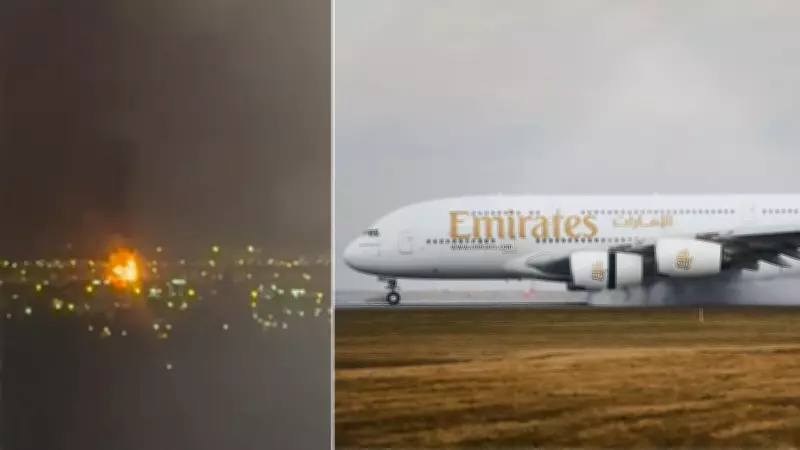
US-Israel-Iran War Escalates: Drone Strike Ignites Fire at Dubai Airport, Flights Halted
The ongoing military confrontation between the United States, Israel, and Iran has intensified into one of the most volatile crises in the Middle East in recent years, with a major fire breaking out at Dubai International Airport following a drone strike, leading to the temporary suspension of flights. This incident underscores the rapid expansion of the conflict, which now involves missile strikes, drone attacks, and air raids across multiple countries in the region, raising global concerns about a prolonged war and severe disruptions to international energy supplies.
Conflict Origins and Rapid Escalation
The war began after coordinated American and Israeli strikes targeted Iranian military infrastructure, including air defence systems and missile launch facilities. In response, Iran launched large waves of ballistic missiles and drones aimed at Israeli territory and US military bases across the Gulf region. The conflict quickly spread beyond the initial adversaries, with countries such as the United Arab Emirates, Saudi Arabia, Bahrain, and Kuwait reporting interceptions of drones or missile threats. Additionally, the Lebanese militant group Hezbollah opened a northern front by firing rockets toward Israel, prompting Israeli airstrikes in Lebanon, further complicating the regional dynamics.
Dubai Airport Incident and Regional Fallout
In a significant development, a drone-related incident sparked a fire near Dubai International Airport, causing emergency services to respond swiftly. The Government of Dubai Media Office confirmed that civil defence teams successfully contained the blaze, which impacted a fuel tank in the vicinity. No injuries were reported, but as a precautionary measure, the Dubai Civil Aviation Authority temporarily suspended flights to ensure the safety of passengers and staff. This event highlights the widening geographical scope of the conflict, as attacks now directly affect critical infrastructure in Gulf states, exacerbating regional instability.

Global Energy and Economic Implications
The fighting has severely disrupted global energy routes, particularly around the strategically vital Strait of Hormuz, a narrow waterway that carries a significant portion of the world’s oil shipments. Fears that the conflict could impede tanker traffic have already triggered uncertainty in global energy markets, with oil prices surging amid concerns of a potential crisis. US President Donald Trump has advocated for forming a global coalition to police the strait, emphasizing the need for countries reliant on Gulf oil to help keep it open, and reported receiving positive responses from potential partners.
Political and Military Developments
Amid the escalating violence, political shifts have occurred, including Iran appointing Mojtaba Khamenei as the new Supreme Leader following the killing of Ali Khamenei in the opening phase of the conflict. On the diplomatic front, Trump stated that Washington is in discussions with Tehran but believes Iran is not yet ready to reach a deal, citing the loss of much of Iran’s leadership. He also claimed that US and Israeli strikes have significantly weakened Iran’s military capabilities, reducing missile stockpiles and drone production capacity to roughly 20% of previous levels. Meanwhile, Iran’s foreign minister Abbas Araghchi noted that nuclear material at damaged facilities is buried under rubble and could only be retrieved under the supervision of the International Atomic Energy Agency, adding a layer of complexity to potential negotiations.
Broader Regional and International Concerns
As the war enters its third week with no signs of de-escalation, the crisis has raised alarms about a wider conflict that could prolong disruptions to international security and energy supplies. The involvement of multiple regional states and non-state actors like Hezbollah has turned the confrontation into a multifaceted regional crisis, with missile exchanges continuing to threaten civilian and military targets alike. Global leaders and markets are closely monitoring the situation, as any further escalation could have far-reaching consequences for geopolitical stability and economic security worldwide.