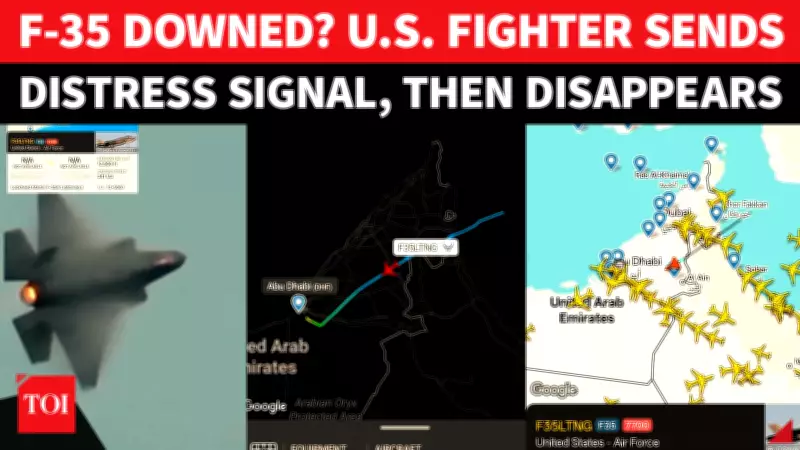
A U.S. Air Force F-35 Lightning II fighter jet reportedly declared an in-flight emergency near the strategic Strait of Hormuz on May 11, 2026, amid escalating tensions linked to the ongoing Iran conflict. Flight-tracking data indicated that the stealth aircraft transmitted squawk code 7700—a universal signal for an emergency—before altering its course toward the United Arab Emirates and subsequently disappearing from public transponder visibility.
Conflicting Reports and Lack of Confirmation
Iranian state-linked media outlets quickly claimed that the F-35 had been shot down by Iranian forces, asserting a major military success. However, as of now, no wreckage, satellite imagery, or official confirmation from credible sources has emerged to support this assertion. Neither the Pentagon nor the U.S. Central Command (CENTCOM) has confirmed any hostile action against the aircraft.
Possible Technical Malfunction
Military observers and analysts suggest that the aircraft's continued movement toward the UAE, rather than a sudden loss of signal or crash, points to a technical malfunction rather than combat damage. The decision to divert to a friendly airbase in the UAE aligns with standard procedures for mechanical or system failures. The lack of any distress signals indicating an attack further supports this theory.

Regional Context and Rising Tensions
The incident occurs against a backdrop of heightened military posturing in the Gulf region. The Strait of Hormuz, a critical chokepoint for global oil shipments, has been a flashpoint in the Iran-U.S. confrontation. Recent weeks have seen increased naval patrols, drone activity, and rhetorical escalations from both sides. The F-35 emergency adds another layer of uncertainty, with potential implications for regional stability and global energy markets.
As the situation develops, international attention remains focused on any official statements from the U.S. military and Iranian authorities. The absence of concrete evidence for a shoot-down, combined with the aircraft's controlled diversion, suggests that the most likely explanation is a routine emergency landing due to technical issues. However, the incident underscores the volatile environment in which such operations are conducted.