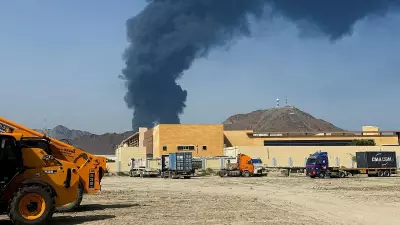
The United States military has confirmed conducting a series of airstrikes in northwestern Nigeria, targeting fighters affiliated with the Islamic State group. This action marks a significant escalation in direct US involvement against terrorist elements in the region.
Details of the Military Operation
According to officials from US Africa Command (AFRICOM), the strikes were carried out recently against the Islamic State West Africa Province (ISWAP). The operation took place in a remote area of Nigeria's northwest, a region where the militant group has been attempting to expand its influence beyond its traditional stronghold in the country's northeast.
The US military stated that the precision strikes were authorized and that initial assessments indicate no civilian casualties. This careful targeting aligns with standard protocols to minimize collateral damage. The exact number of militants neutralized and the specific assets used, believed to be armed drones, were not immediately disclosed in the official statement.

Context and Regional Security Concerns
This military intervention occurs against a complex backdrop of regional insecurity. Nigeria has been grappling with a multifaceted insurgency for over a decade, primarily against Boko Haram and its more potent splinter group, ISWAP. While these groups have been largely contained to the northeastern states of Borno, Adamawa, and Yobe, there has been a noticeable push by ISWAP to establish a presence in northwestern Nigeria.
The northwest is already plagued by widespread violence from criminal gangs, locally referred to as "bandits," who carry out mass kidnappings, killings, and cattle rustling. The potential convergence of ideological Islamist militants with these criminal networks presents a severe and evolving threat to stability. The US airstrikes appear to be a preemptive move to disrupt this dangerous expansion before it gains a firm foothold.
Implications and Official Statements
The decision to launch these strikes underscores the continued US strategic interest in counterterrorism efforts in Africa's Sahel region. The United States maintains a small military presence in Niger, which borders Nigeria to the north, and provides intelligence, training, and logistical support to regional forces.
AFRICOM emphasized that the operation was conducted in coordination with the Nigerian government. This point is crucial, as it affirms Nigerian sovereignty and suggests a level of bilateral cooperation in addressing the shared threat. Nigerian authorities have yet to release a detailed independent statement on the incident.
Security analysts suggest that these strikes signal a shift in tactics. Instead of solely relying on advising and assisting local troops, the US is now willing to take direct, kinetic action against high-value targets in new fronts where the threat is deemed significant. This could potentially alter the dynamics of the conflict and may lead to increased pressure on militant factions operating in the region.
However, the long-term effectiveness of such drone strikes remains a topic of debate. While they can decapitate leadership and disrupt operations in the short term, they do not address the underlying socio-economic drivers of instability, such as poverty, lack of governance, and ethnic tensions. The challenge for both the US and Nigerian governments will be to couple such military actions with holistic strategies aimed at winning the trust of local populations and fostering sustainable development.