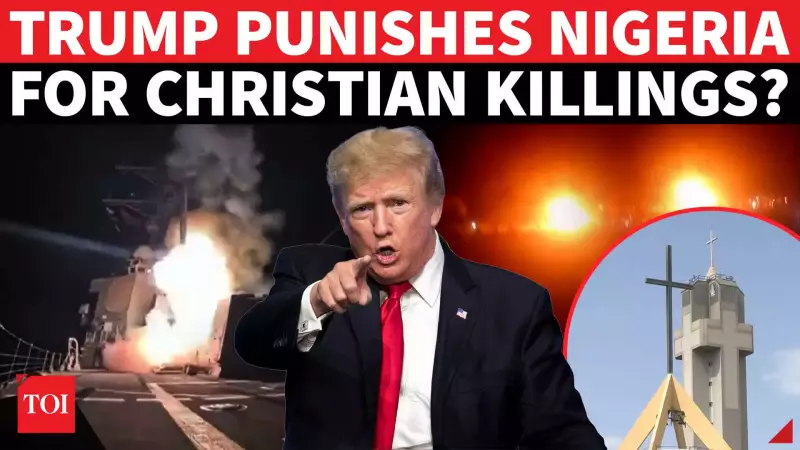
In a dramatic military intervention on Christmas Day, U.S. President Donald Trump authorized targeted airstrikes against Islamic State (ISIS) militants operating in Nigeria. The December 25 operation has sent shockwaves across West Africa, raising urgent questions about the motives behind the strikes and their potential impact on an already volatile region.
The Christmas Day Operation and Its Stated Justification
The airstrikes, confirmed by U.S. officials, targeted ISIS-affiliated fighters believed to be responsible for recent attacks on civilians. The decision followed repeated accusations from President Trump and U.S. conservative circles that the Nigerian government has consistently failed to protect its Christian communities from relentless extremist violence. Washington's official stance maintains that the operation was a necessary counter-terrorism measure aimed at degrading a known threat.
A Controversial Motive: Counter-Terrorism or Domestic Politics?
While the White House frames the action as a security imperative, critics on multiple fronts are scrutinizing the underlying reasons. Analysts and regional experts point to significant domestic political pressure within the United States, particularly from influential evangelical groups who have long highlighted the persecution of Christians in Nigeria's conflict zones. This has led to speculation that the timing and nature of the strikes were influenced as much by internal American politics as by strategic necessity.

Nigeria's government, while confirming a level of coordination with U.S. forces, has firmly rejected the characterization of its internal conflict as purely religious. Officials emphasize that the violence from groups like Boko Haram and ISIS-West Africa affects citizens of all faiths and is part of a complex web of insurgency, criminality, and regional instability.
Deepening a Fragile Security Landscape
The intervention arrives at a perilous time for Nigeria. The nation's security is severely strained by a combination of Boko Haram insurgents, ISIS-linked factions, and widespread criminal gang activity. Security analysts are issuing strong warnings that foreign-led airstrikes, without a comprehensive and locally-led strategy, risk exacerbating the crisis. Potential consequences include escalating retaliatory attacks, further radicalization, and a dangerous complication of the already fragile security dynamics in the Lake Chad basin region.
The Christmas Day strikes of December 25, 2025, therefore, represent more than a single military action. They mark a significant and controversial escalation of direct U.S. involvement in Nigeria's security woes, setting a precedent that will likely have diplomatic and strategic repercussions for America's role in West Africa for years to come.