The return of exiled Bangladeshi author Taslima Nasreen to her homeland after more than two decades has plunged parts of the capital, Dhaka, into chaos and violence. Her visit, intended to be a private family affair, has ignited fierce protests from hardline Islamist groups, leading to deadly clashes with police.
A Controversial Homecoming After 21 Years
Taslima Nasreen, a physician-turned-writer known for her feminist views and criticism of religious orthodoxy, landed in Dhaka on October 28. This marked her first trip back to Bangladesh since she fled the country in 1994 under pressure from fundamentalist groups who issued fatwas against her. Her writings, particularly the novel "Lajja" (Shame), had drawn accusations of blasphemy.
Her return was facilitated by a court order and was kept under wraps initially. Nasreen arrived using a special pass, as her passport had expired long ago. The author stated her visit was solely to see her ailing mother and other family members, emphasizing she had no plans for public engagements or political statements.

Protests Erupt, Turning Deadly
Despite the private nature of her visit, news of her presence spread rapidly. The hardline Islamist group Hefazat-e-Islam quickly mobilized its supporters. On October 31, thousands of protesters took to the streets in Dhaka's Mohammadpur area, where Nasreen was reportedly staying.
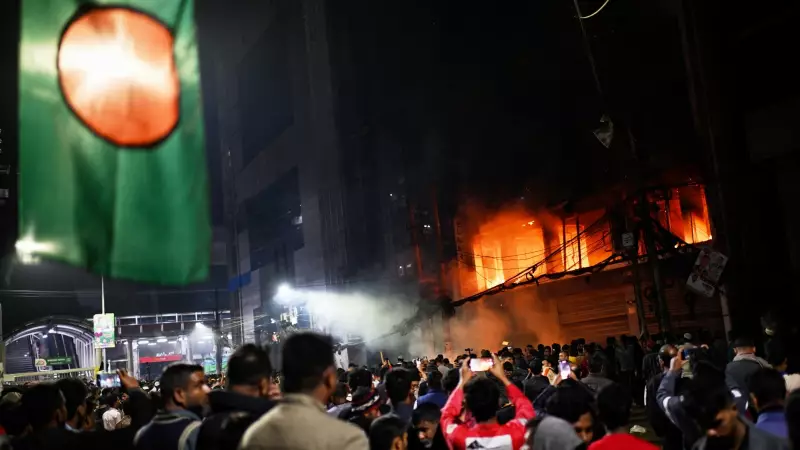
The demonstrations swiftly turned violent. Protesters, chanting slogans demanding Nasreen's immediate expulsion from the country, clashed with police who had erected barricades. Law enforcement used tear gas, rubber bullets, and water cannons to disperse the crowds, who responded by hurling bricks and stones.
The violence resulted in a tragic toll. Two people were killed, and dozens more were injured, including both protesters and police officers. The area witnessed scenes of burning vehicles and general unrest, disrupting normal life for hours.
Government Response and Lasting Implications
The Bangladeshi government, led by Prime Minister Sheikh Hasina's Awami League, finds itself in a delicate position. It has historically positioned itself as a guardian of secular values but also maintains a complex relationship with religious groups. Following the clashes, police have filed cases against hundreds of unidentified individuals linked to the violence.
Security around Nasreen has been intensified, and there are reports that she may cut her visit short due to the severe security threat. The incident highlights the deep-seated religious and ideological fractures within Bangladeshi society. It underscores the ongoing tension between progressive, secular forces and conservative religious elements in the country.
Analysts suggest the protests are not solely about Nasreen but are also a show of strength by Islamist groups, testing the government's resolve. The event has sparked a nationwide debate on freedom of expression, women's rights, and religious tolerance in Bangladesh. The aftermath of this violent episode will likely influence the country's socio-political discourse for some time, as it grapples with the conflicting identities of its liberation war heritage and its majority-Muslim population.