

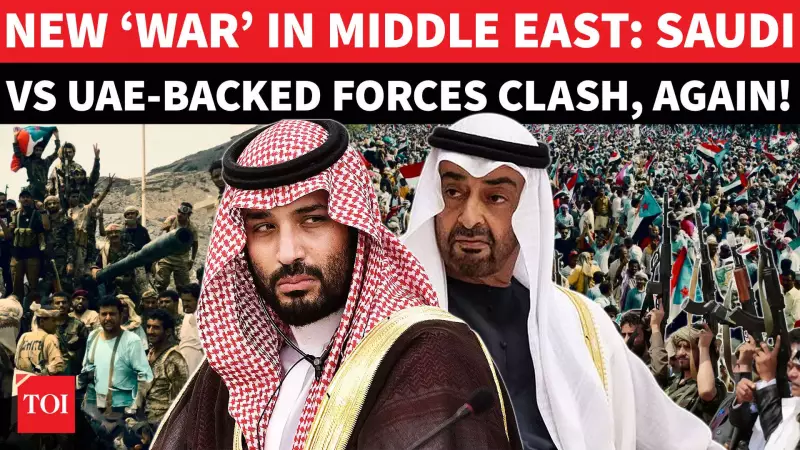
Tensions have sharply escalated in southern Yemen, with the Saudi-led military coalition issuing a stern warning to forces backed by the United Arab Emirates (UAE). The coalition has declared it will respond immediately to any military moves by the Southern Transitional Council (STC) separatists, raising fears of a new and dangerous flashpoint in the long-running war.
Coalition Issues Direct Warning to Separatists
The Saudi-led coalition's spokesperson, Brigadier General Turki al-Maliki, delivered a clear and public ultimatum. He stated that any violations of ongoing de-escalation efforts in the region would be dealt with directly. The primary stated aim of this stance is to protect civilians caught in the crossfire of Yemen's complex conflict.
In a significant accusation, Brigadier General al-Maliki charged the STC forces with committing serious human rights abuses. This public condemnation marks a further deterioration in the already fragile relationship between the Saudi-led coalition, which nominally backs Yemen's internationally recognized government, and the UAE-backed STC, which seeks an independent southern state.

A Fractured Alliance and Rising Tensions
The warning highlights the deep fractures within the anti-Houthi alliance. While both Saudi Arabia and the UAE joined forces against the Houthi rebels, their local partners have often been at odds. The STC, heavily supported by the UAE, controls the strategic port city of Aden and much of southern Yemen.
The coalition's threat of an immediate military response suggests that diplomatic channels to manage these internal rivalries are under severe strain. This development on December 27, 2025, threatens to open a new front within the broader Yemeni civil war, potentially diverting attention and resources from the fight against the Houthis and exacerbating the humanitarian crisis.
Implications for Yemen's Future and Regional Stability
The direct confrontation between coalition forces and their former allies poses grave risks. Firstly, it could lead to intense fighting in populated areas of southern Yemen, endangering civilian lives and disrupting aid flows. Secondly, it undermines any unified strategy for a political settlement to Yemen's conflict, making a comprehensive peace deal even more elusive.
The situation places the UAE in a difficult position, balancing its support for the STC against its broader alliance with Saudi Arabia. For the people of Yemen, this new flashpoint between power brokers promises more instability and suffering in a country already devastated by years of war, famine, and disease.
The international community watches with concern as this new phase of the conflict unfolds, worrying that internal strife among anti-Houthi factions could further empower the rebels and prolong one of the world's worst humanitarian disasters.






