

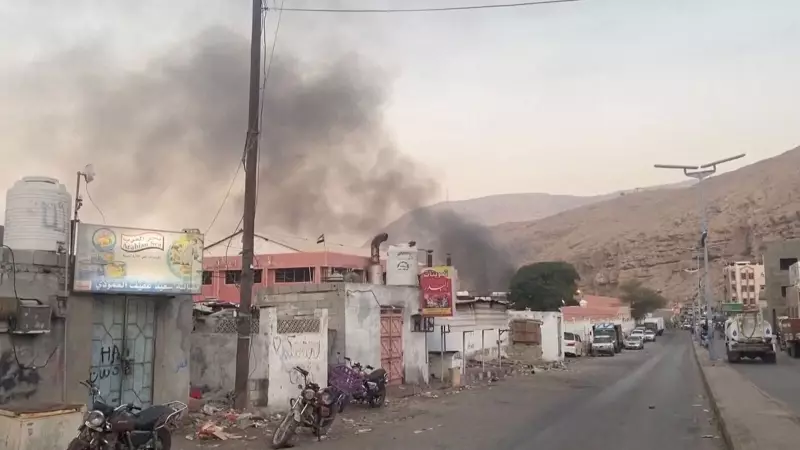
Saudi Arabia launched airstrikes on the Yemeni port city of Mukalla on Tuesday, December 30, following the arrival of an alleged arms shipment from the United Arab Emirates (UAE). The Saudi-led coalition also issued a stern warning to Abu Dhabi, demanding its forces leave Yemen within 24 hours.
Coalition Airstrike and the Alleged Arms Shipment
The Saudi Press Agency released a military statement confirming the bombings. It stated that the coalition air force conducted a "limited airstrike" targeting weapons and military vehicles that had been offloaded from two vessels at the Mukalla port. The shipment reportedly originated from Fujairah in the UAE.
The statement accused the ships' crew of disabling tracking devices and unloading a significant cache of arms and combat vehicles intended to support forces of the Southern Transitional Council (STC), a separatist group backed by the Emirates. The coalition deemed these weapons "an imminent threat" to peace and stability in the region.

UAE's Response and Decision to Withdraw
In response to the airstrikes and the ultimatum, the UAE announced it would pull out its remaining forces from Yemen. Initially, the Emirati side denied shipping arms to Mukalla, clarifying that the vessels carried vehicles for its own forces operating in the country.
However, citing "recent developments and their potential repercussions on the safety and effectiveness of counter-terrorism operations," the UAE agreed to the demands for withdrawal. The Emirati statement did not specify a precise timeline for the pullout, leaving it unclear if it would be completed within the 24-hour deadline set by the coalition.
Background of Rising Tensions
The bombing incident occurred amid escalating tensions over the advance of STC forces in southern Yemen. While the STC and its allies issued statements supporting the UAE's presence, other factions allied with Saudi Arabia demanded the Emirati withdrawal.
Mukalla is located in Yemen's Hadramout governorate, an area recently seized by the STC. The port city is approximately 480 kilometers (300 miles) northeast of Aden, which has served as the seat of power for anti-Houthi forces since the rebels captured the capital, Sanaa, in 2014.
Prior to the airstrike, the UAE had publicly called for "restraint and wisdom," but the situation rapidly deteriorated following the arrival of the ships at Mukalla port, leading to direct military action by the Saudi-led coalition.






