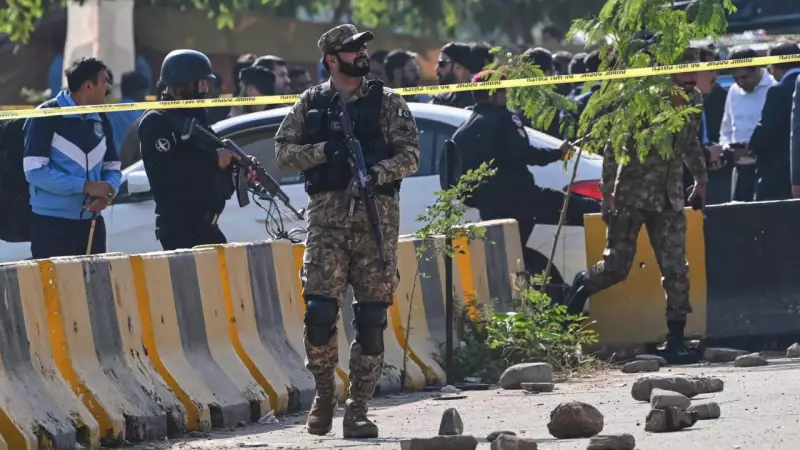
Pakistan witnessed its most violent year in a decade during 2025, with a staggering 71% of all terrorist incidents concentrated in the province of Khyber Pakhtunkhwa (KP), according to a senior military official. Lieutenant General Ahmed Sharif Chaudhry, addressing the media on Tuesday, pointed to a "politically conducive environment and a flourishing political-criminal-terror nexus" in the region as the primary driver behind this alarming concentration of violence.
Provincial Epicentre: Khyber Pakhtunkhwa's Sharp Descent
Data from the independent Centre for Research and Security Studies (CRSS) confirms the severity of the crisis in KP. The province recorded a dramatic escalation, with fatalities jumping from 1,620 in 2024 to 2,331 in 2025. This represents a year-on-year increase exceeding 40%, underscoring the rapid deterioration of security in the region bordering Afghanistan.
The local impact was devastating. In Bannu district alone, Deputy Inspector General of Police Sajjad Khan reported that 27 police personnel lost their lives in 134 separate attacks throughout the year. In response, police conducted 168 intelligence-based operations, resulting in the arrest of 105 militants and the killing of 65 others.

National Carnage: A Decade's Deadliest Toll
The broader national picture painted by security institutes is even grimmer. The Pakistan Institute for Conflict and Security Studies (PICSS) declared 2025 the "deadliest" year in ten years. The institute reported a total of 3,387 combat-related deaths for the year.
The breakdown of casualties reveals the widespread toll:
- 2,115 terrorists killed
- 664 security personnel fatalities (a 26% rise, highest since 2011)
- 580 civilian deaths (a 24% increase, worst in a decade)
- 28 members of pro-government peace committees
PICSS noted that violence intensified in both "tempo and lethality," pushing multiple security indicators to their highest levels in years. The total number of militant attacks climbed to its highest annual total since 2014.
Evolving Tactics and Regional Tensions
The report highlighted dangerous trends in militant tactics. The use of suicide bombings rose by 53%, and the deployment of small drones for attacks showed a clear upward trajectory. Overall, terrorist incidents across Pakistan increased to 1,063, the highest count since 2014. Injuries from violence surged by 53% to 2,263 individuals.
While KP was the worst-hit, the province of Balochistan also experienced acute violence. The crisis is deeply intertwined with regional tensions. Pakistan has repeatedly accused Afghanistan's Taliban administration of providing sanctuary to the Tehrik-e-Taliban Pakistan (TTP), the militant group blamed for the surge in attacks since 2021. Afghan officials consistently deny these allegations.
Despite the TTP operating independently, its close ties with the Afghan Taliban complicate the security landscape. Relations between Islamabad and Kabul have been severely strained since October, following border clashes and accusations from Kabul linking Pakistan to explosions in the Afghan capital. Although Qatar mediated a temporary ceasefire, subsequent talks hosted by Turkey in November failed to yield a lasting peace agreement.
The data from 2025 presents a stark portrait of a deepening security crisis in Pakistan, with Khyber Pakhtunkhwa at its volatile core and national figures reaching tragic, decade-high levels.