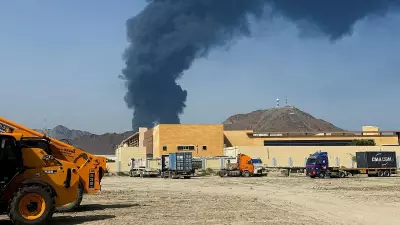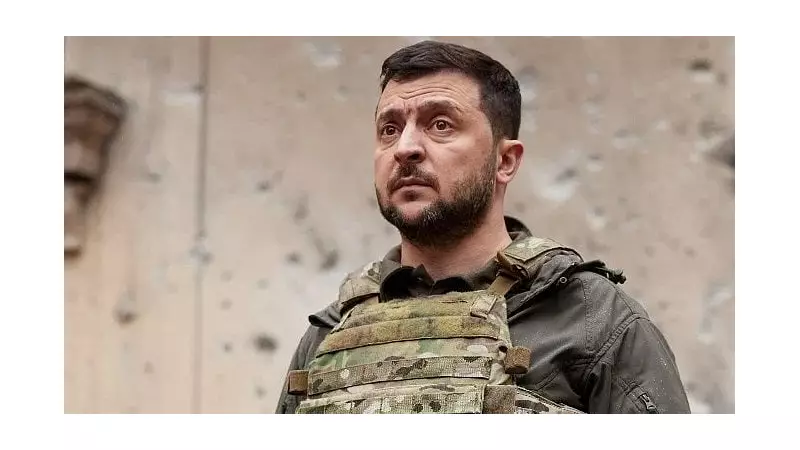
Ukrainian President Volodymyr Zelenskyy has accused Russia of carrying out one of the largest aerial assaults of the ongoing conflict, targeting his country with a massive barrage of drones and missiles overnight. The attack, which occurred during the Christmas and New Year period, has drawn sharp condemnation for its scale and timing.
Unprecedented Scale of the Overnight Assault
In a statement posted on the social media platform X, President Zelenskyy provided chilling details of the offensive. He stated that Russian forces launched nearly 500 drones and approximately 40 missiles across Ukraine. The coordinated strike represents a significant escalation in aerial tactics, overwhelming Ukrainian air defences which have been engaged in a constant battle to protect critical infrastructure and civilian areas.
The timing of the assault, during a period traditionally marked by peace and celebration, has been highlighted as particularly egregious. Zelenskyy's message underscored the deliberate nature of targeting homes and essential services when families gather. The Ukrainian military and emergency services worked through the night to respond to the impacts across multiple regions.

Zelenskyy's Stern Warning and Call for Action
In his online post, the Ukrainian leader did not mince words, framing the attack as a deliberate act of terror against the civilian population. "If Russia turns even the Christmas and New Year period into a time of destroyed homes and burned apartments, of ruined power plants, then this sick activity can only be responded to with truly strong steps," Zelenskyy wrote.
This statement is being interpreted as a direct appeal for increased and more advanced military support from Ukraine's international allies. The call for "truly strong steps" suggests a push for longer-range weapons, enhanced air defence systems like Patriots, and further sanctions on Russia. The attack demonstrates Moscow's continued ability and willingness to launch large-scale, hybrid assaults combining low-cost drones with high-precision missiles.
Impact on Civilian Infrastructure and Global Response
Initial reports indicate that the wave of drones and missiles targeted energy facilities, residential buildings, and industrial sites. Attacks on power plants threaten to plunge millions into darkness during the harsh winter, a tactic Russia has employed consistently to break civilian morale. The sheer volume of drones, likely including Iranian-made Shahed models, points to a strategy of saturation, aiming to penetrate defences through numbers.
The international community is closely monitoring the aftermath. Such a large-scale attack is expected to renew debates in Western capitals about the pace and scope of military aid to Kyiv. For global observers, including those in India following the conflict's impact on energy and food security, the escalation signals a protracted war with no near-term diplomatic resolution in sight. The event, dated 27 December 2025, marks a sombre end to the year in Eastern Europe.
The world now watches to see what the promised "strong steps" from Ukraine and its partners will entail, as the conflict enters a new phase defined by intensive aerial warfare and attacks on civilian infrastructure.