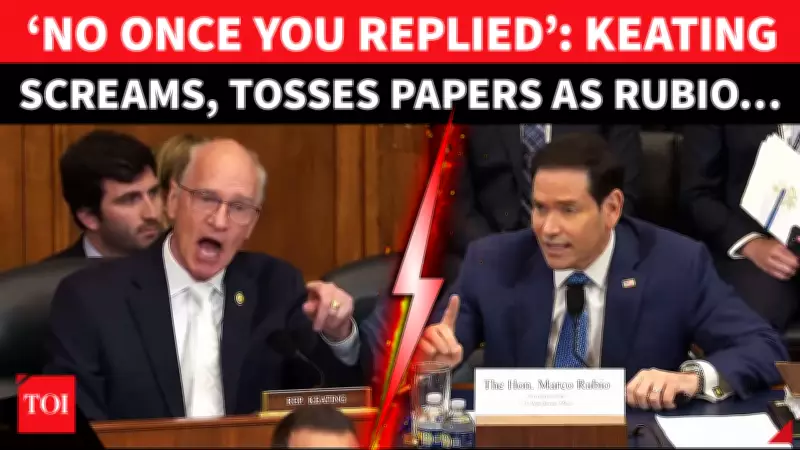
A heated confrontation unfolded during a House Foreign Affairs Committee hearing as Congressman William Keating challenged Secretary of State Marco Rubio on the Trump administration's approach to Ukraine, intelligence appointments, and relations with Russia. The exchange underscored deep disagreements over foreign policy priorities and national security concerns.
Keating's Criticism
Keating argued that current policies risk weakening national security and questioned whether Washington was doing enough to back Kyiv. He pressed Rubio on the administration's commitment to supporting Ukraine amid ongoing Russian aggression. Keating also raised concerns about intelligence appointments, suggesting that key positions were filled with individuals lacking necessary expertise, potentially compromising U.S. security interests.
Rubio's Defense
Secretary Rubio pushed back against the criticism, defending diplomatic efforts and insisting that American support for Ukraine remains firm. He emphasized that the administration is pursuing a balanced approach, combining military aid with diplomatic initiatives to de-escalate tensions. Rubio also highlighted recent intelligence-sharing agreements and reiterated the U.S. commitment to NATO allies.

Broader Implications
The tense exchange reflects ongoing partisan divisions over foreign policy, with some lawmakers advocating for a more aggressive stance against Russia while others prioritize diplomatic solutions. The hearing also touched on broader security concerns, including cybersecurity threats and regional stability in Eastern Europe. As the conflict in Ukraine continues, such debates are likely to intensify, shaping the direction of U.S. foreign policy in the coming months.
This confrontation is part of a series of hearings where administration officials face scrutiny over their handling of international affairs. The outcome could influence public opinion and legislative action regarding aid packages and sanctions. With the 2026 midterm elections approaching, foreign policy remains a key issue for voters, adding pressure on both parties to articulate clear strategies.