Iran's Midget Submarines Turn Strait of Hormuz into Underwater Danger Zone
As the Middle East conflict intensifies, the battle extends beyond airstrikes and surface engagements into the depths of the Strait of Hormuz. A hidden and formidable threat lurks beneath the waves, one that is notoriously difficult to detect and neutralize, posing a severe risk to global maritime security.
Strategic Importance of the Strait of Hormuz
The Strait of Hormuz, situated between the Persian Gulf and the Gulf of Oman, is a critical chokepoint for global energy supplies. This narrow waterway facilitates the transit of nearly 20% of the world's oil, making any disruption here capable of triggering immediate worldwide consequences, including soaring oil prices and supply shortages. Iran's strategic location along the strait has enabled it to develop advanced capabilities aimed at controlling or disrupting maritime traffic, leveraging its geographic advantage to exert influence over this vital route.
Ghadir-Class Midget Submarines: A Stealthy Menace
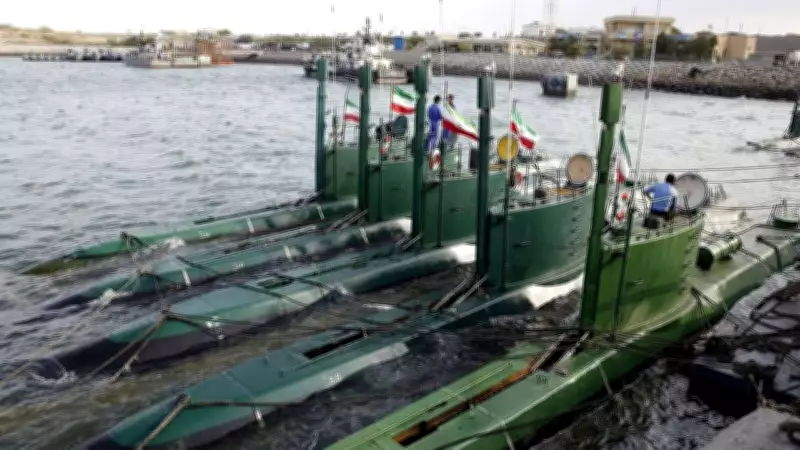
At the heart of this underwater threat is Iran's fleet of Ghadir-class midget submarines. These compact vessels measure approximately 29 meters in length and weigh around 120 tons, allowing them to operate effectively in shallow waters as shallow as 30 meters. This depth aligns perfectly with the average depth of key shipping channels in the Strait of Hormuz, as reported by The Telegraph. Iran is estimated to possess up to 10 of these submarines, which exploit their small size to evade detection by conventional naval surveillance systems.

In stark contrast, the United States' Ohio-class nuclear submarines are massive, weighing about 18,750 tons and measuring 170 meters in length. However, the naturally noisy environment of the strait, caused by heavy ship traffic and offshore activities, complicates detection efforts for all underwater assets. The Ghadir-class submarines are equipped to launch torpedoes and, more critically, lay naval mines. Experts highlight that their mine-laying capability represents the greatest danger, as even a limited deployment of mines can obstruct shipping routes for extended periods. Clearing these mines is a slow and complex process, potentially halting vessel movement through the strait entirely. Iran has invested decades in studying the Gulf's geography and training its naval personnel, enhancing the operational effectiveness of these submarines in these contested waters.
Iran's Diverse Submarine Arsenal
Beyond the Ghadir-class, Iran maintains a varied submarine fleet to bolster its naval prowess. The Fateh-class submarines, weighing around 600 tonnes, are larger and feature improved sensors, enabling operations in deeper waters while retaining a relatively low profile. Additionally, Iran operates Russian-built Kilo-class submarines, including the Taregh, Yunes, and Nooh, which offer greater power but are less suited to the shallow Gulf waters. Other acquisitions from Russia in the 1990s, such as the Nahang midget submarines, further diversify Iran's underwater capabilities. The country has also developed specialized systems like the e-Ghavasi and Al-Sabehat swimmer delivery vehicles, designed for covert operations such as mine-laying in shallow coastal areas by naval commandos.
Complementary Naval Strategies: Speedboats and Drones
Iran's naval strategy is not limited to submarines; it heavily incorporates fast-attack vessels operated by the Islamic Revolutionary Guard Corps (IRGC). These boats employ swarm tactics to overwhelm larger ships in confined waters, with advanced platforms like the Zulfaghar-class boats equipped with air defence systems, representing some of Iran's most capable fast-attack vessels. Unconventional platforms such as the Bavar-2, a "flying boat" that can rise slightly above the water surface, increase speed while reducing radar visibility, adding another layer of complexity to Iran's maritime threat.

A significant long-term peril stems from Iran's extensive anti-ship missile systems deployed along its coastline. These include short-range missiles like the Kowsar and Nasr-1 for targeting nearby vessels, as well as longer-range cruise and ballistic missiles capable of striking ships across the Strait of Hormuz and into the Gulf of Oman. The Abu Mahdi cruise missile, with a reported range of up to 1000 kilometers, extends this threat significantly. Anti-ship ballistic missiles such as the Gulf and Hormuz-2, designed to hit moving vessels using satellite guidance, further enhance Iran's offensive capabilities. Many of these systems are mobile, mounted on trucks or concealed in tunnels and bunkers, making them challenging to locate and neutralize through conventional airstrikes.
Naval Mines: The Ultimate Risk to Global Trade
Military experts assert that Iran's most potent tool may be its vast stockpile of naval mines. These include contact mines that explode on impact, magnetic mines that detect a ship's hull, acoustic mines triggered by propeller noise, and pressure mines that respond to water movement. Some advanced variants are specifically designed to target large commercial vessels. Even a limited deployment of such mines could halt maritime traffic for weeks, requiring slow and complex clearance operations that would severely impact global trade and energy supplies.
Conclusion: The Underwater Challenge Persists
While U.S. forces continue to target visible threats like Iranian speedboats and underground facilities, the underwater dimension of the conflict remains a formidable challenge. Submarines and mines are far harder to detect and neutralize, granting Iran the ability to disrupt global shipping routes without engaging in direct, large-scale naval battles. As tensions simmer, the Strait of Hormuz stands as a flashpoint where hidden dangers beneath the surface could unleash widespread economic repercussions, underscoring the urgent need for enhanced maritime security measures in this strategically vital region.