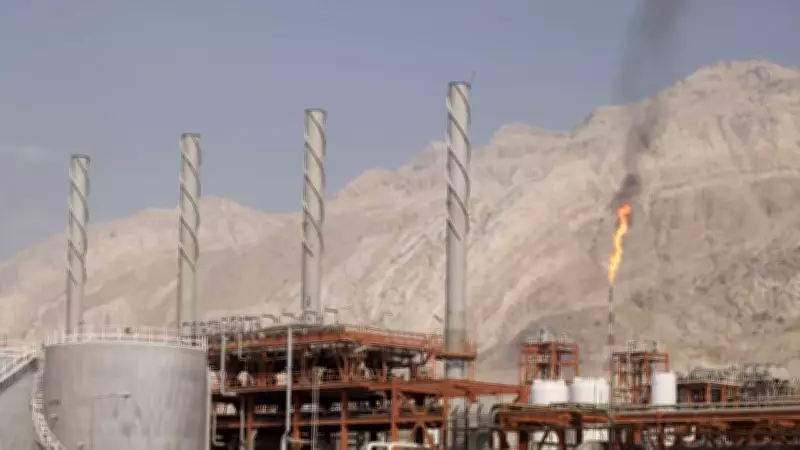
Iran Escalates Conflict with First Use of Long-Range Missiles, Puts European Capitals in Crosshairs
In a dramatic escalation of regional hostilities, Iranian military forces fired long-range ballistic missiles for the first time on Saturday, significantly expanding the geographical scope of the ongoing conflict beyond the Middle East. The unprecedented missile launches have raised immediate and grave concerns that major European capitals could now be within direct striking distance of Iran's advanced weaponry.
Missile Strikes Target Israeli Cities and US-UK Military Base
According to statements from Israeli military chief Eyal Zamir, Iran launched two powerful 4,000-kilometer-range ballistic missiles that successfully struck the strategic US-UK military base at Diego Garcia in the Indian Ocean. The Israeli military explicitly described this development as marking the "first time" Iran has deployed such long-range missiles in the current conflict.
"These missiles are not intended to strike Israel alone," Zamir emphasized in an official statement. "Their extensive range now reaches European capitals—Berlin, Paris, and Rome are all within direct threat range." This sobering assessment was confirmed by multiple military analysts and reported by international news agency Reuters.

Simultaneous Attacks Injure Dozens Near Israel's Nuclear Facilities
In coordinated late Saturday strikes, Iranian missiles targeted the southern Israeli cities of Dimona and Arad, resulting in dozens of civilian injuries including several children. The attacks occurred in separate incidents that created widespread chaos and emergency responses.
Iran's Revolutionary Guards claimed responsibility early Sunday, stating they had targeted "military installations" and security centers in southern Israel. This claim carries particular significance as Israel's secretive nuclear reactor is located approximately 13 kilometers southeast of Dimona. Both affected cities lie in close proximity to multiple military sites, including the strategically important Nevatim Air Base, one of Israel's largest military installations.
Nuclear Facilities and Energy Infrastructure Become Flashpoints
Iranian media reported that US-Israeli forces had attacked the Shahid Ahmadi-Roshan Natanz enrichment complex earlier on Saturday morning. While technical experts confirmed no radioactive leaks occurred and nearby residents faced no immediate risk, the incident highlighted the precarious nature of nuclear facilities in the conflict zone. Israel officially stated it was unaware of such a strike, while the head of the International Atomic Energy Agency (IAEA) announced an ongoing investigation into the matter.
Further complicating the situation, Iranian media later reported additional strikes on a passenger terminal in the southern port of Bushehr and an empty passenger ship at nearby Kharg Island. This location handles nearly all of Iran's crucial oil exports and is viewed by military strategists as a potential target should Washington decide to escalate by hitting Iranian energy sites or deploying ground troops.
Political Leaders Respond to Escalating Crisis
Israeli Prime Minister Benjamin Netanyahu addressed the nation following the attack on Arad, describing it as "a very difficult evening in the battle for our future." In a statement released by his office, Netanyahu declared, "We are determined to continue striking our enemies on all fronts," signaling Israel's commitment to sustained military response.
The human cost of the conflict continues to mount, with more than 2,000 people reported killed in Iran since the United States and Israel initiated their attacks. In Israel, official figures indicate 15 people have been killed in Iranian strikes since the war began.
International Diplomacy and Strategic Calculations
US President Donald Trump added another layer to the complex geopolitical situation on Friday, posting on social media that Washington was considering "winding down" its military operation against Iran. While claiming the US was close to meeting its strategic goals, Trump insisted that other countries should take the lead in policing the Strait of Hormuz—the critical shipping lane whose potential closure threatens to trigger a global energy crisis.

This latest development represents a significant turning point in the conflict, as Iran's demonstrated capability to strike distant targets fundamentally alters the strategic calculus for European nations previously considered outside the immediate conflict zone. Military analysts warn that the introduction of long-range missile capabilities could prompt broader international involvement and potentially trigger a more widespread regional confrontation.