Iran Unveils 'Haj Qasem' Ballistic Missile in Escalating Conflict with Israel
In a significant escalation of hostilities, Iran's Islamic Revolutionary Guard Corps (IRGC) announced on Tuesday that it has utilized a new ballistic missile, named "Haj Qasem," for the first time in a fresh wave of attacks targeting Israel and United States military installations across the Middle East. The missile, described as an advanced precision-guided weapon, carries the name of the slain commander Qassem Soleimani, adding profound symbolic weight to its military deployment.
Targets and Regional Impact
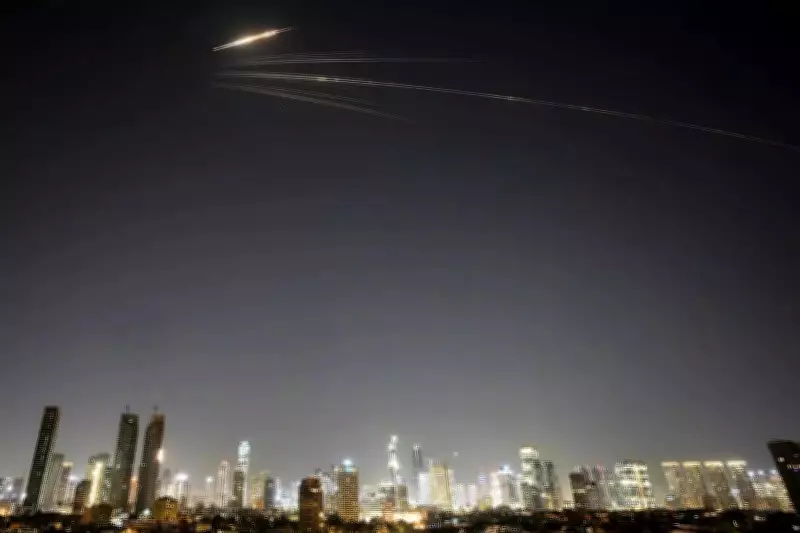
The IRGC stated that the strikes specifically aimed at sites in the Israeli cities of Beit Shemesh, Tel Aviv, and Jerusalem. Furthermore, the barrage reportedly hit US military bases located in Qatar, Kuwait, the United Arab Emirates, and Iraq. This development occurs as the Iran-Israel war enters its third week, with the conflict now spilling across the Gulf region, disrupting critical shipping lanes and drawing in multiple regional actors into a broader security crisis.
Technical Specifications and Capabilities
The Haj Qasem missile is characterized as a road-mobile, solid-fuel medium-range ballistic missile with an estimated range of 1,200 to 1,400 kilometers. This range effectively places all major Israeli cities within its striking distance. The use of solid fuel is a critical feature, as it allows for quicker launch preparations compared to liquid-fuel systems, thereby reducing the window for potential interception before launch.

According to Iranian media reports, the missile is equipped with a manoeuvrable re-entry vehicle (MaRV), which enables it to alter its trajectory during descent. This capability is designed to complicate interception efforts by advanced air defence systems. Additionally, the Haj Qasem employs a combination of inertial navigation and optical or infrared seekers, allowing it to strike targets without reliance on GPS signals, making it operational in contested electronic environments.
Iranian officials have asserted that the missile can evade sophisticated air defence systems such as THAAD and the Patriot missile system. However, these claims are contested by Western analysts and remain unverified independently. The missile is reported to carry a payload of approximately 500 kilograms and travel at extremely high speeds during atmospheric entry. Its road mobility enhances survivability by enabling launchers to be moved and concealed rapidly.
Strategic Deployment and Broader Implications
In the current conflict, Iran has deployed the Haj Qasem alongside other ballistic missiles, including the Ghadr, Emad, and Fattah models, as well as drones, in coordinated strikes. Analysts note that such combinations are typically intended to overwhelm and strain air defence systems through multiple incoming threats, rather than relying on a single platform.
The introduction of the Haj Qasem into active operations underscores Iran's broader reliance on and development of ballistic missile capabilities. This move is viewed as both an operational enhancement and a strategic signal amid sustained pressure from Israeli and US military actions. The missile's deployment reflects Iran's ongoing efforts to improve the accuracy, survivability, and lethality of its missile arsenal over recent years.
As the conflict continues, the real-world effectiveness of the Haj Qasem against layered air defence networks will be closely monitored. Assessments of its impact are likely to evolve, influencing regional security dynamics and the strategic calculations of all involved parties.