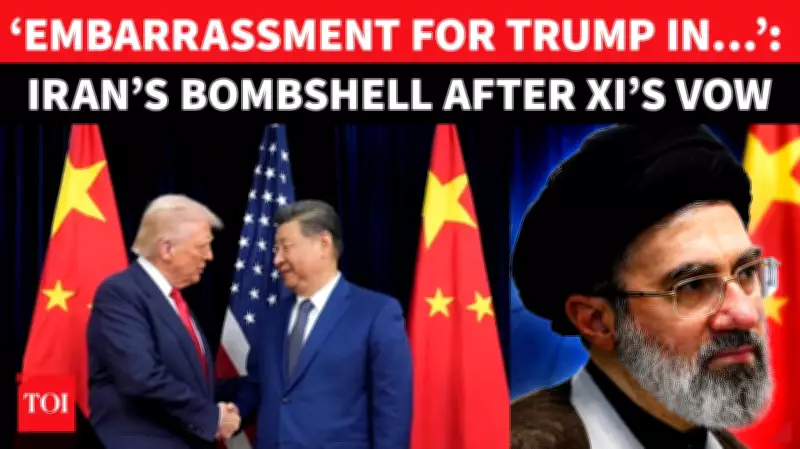
Senior Iranian official Ali Akbar Velayati, an adviser to Supreme Leader Ayatollah Seyyed Mojtaba Khamenei, has issued a stark warning to the United States, asserting that Washington cannot achieve diplomatic victory after allegedly failing militarily against Iran. His remarks came ahead of President Donald Trump's upcoming visit to Beijing, which Velayati accused Trump of trying to exploit by capitalizing on Iran's restraint.
Mocking US Claims and Ceasefire Narratives
Velayati mocked U.S. claims surrounding the recent ceasefire, dismissing them as attempts to spin a narrative of success. He emphasized that Iran's military response had fundamentally reshaped the geopolitical order across West Asia, dealing a blow to American strategic interests in the region.
Tensions Following Collapse of Negotiations
The comments come amid escalating tensions between Tehran and Washington after the collapse of indirect negotiations. Renewed threats of confrontation have heightened concerns about a broader conflict. Velayati's statements serve as a reminder of Iran's defiance and its insistence on not being pressured by U.S. diplomatic or military posturing.

Velayati specifically targeted President Trump, accusing him of trying to leverage Iran's patience and restraint before his diplomatic engagements in China. He warned that the United States should not expect a 'victory lap' in Beijing, implying that Trump's attempts to project strength would be undermined by Iran's resilience.
Iran's Military Response and Regional Impact
According to Velayati, Iran's military actions have not only defended its sovereignty but also altered the strategic landscape of West Asia. He claimed that the United States had suffered a 'battlefield defeat' and could not compensate for it through diplomatic maneuvers. The adviser reiterated Iran's readiness to counter any further aggression, underscoring the Islamic Republic's commitment to its national security.
Broader Context of US-Iran Hostilities
The latest exchange follows a series of hostile incidents, including Iranian fast boats swarming a U.S. warship in the Persian Gulf and threats of heavy assaults on American bases. The Strait of Hormuz remains a flashpoint, with Iran reportedly targeting vessels near UAE and Kuwait. Meanwhile, Hezbollah, an Iran-backed group, has launched precision attacks on Israeli positions, further complicating the regional dynamics.
As Trump prepares for his Beijing visit, the Iranian leadership appears determined to undermine any U.S. diplomatic gains. Velayati's remarks reflect a broader strategy of projecting strength and resisting American pressure, even as the possibility of direct confrontation looms.