India has formally rejected the arbitration award issued by the Hague-based Permanent Court of Arbitration (PCA) concerning the Indus Waters Treaty, asserting that the treaty is effectively in abeyance due to Pakistan's persistent cross-border terrorism.
India's Stance on the Treaty
The Ministry of External Affairs (MEA) stated on Friday that India does not recognize the PCA's decision on the interpretation of the Indus Waters Treaty. The MEA emphasized that the treaty, signed in 1960, has been unilaterally violated by Pakistan through its support for terrorism and actions that undermine the spirit of the agreement.
Key Points of India's Rejection:

- The arbitration award is legally flawed and lacks jurisdiction.
- Pakistan's cross-border terrorism has rendered the treaty in abeyance.
- India reserves the right to take appropriate measures to protect its interests.
Background of the Dispute
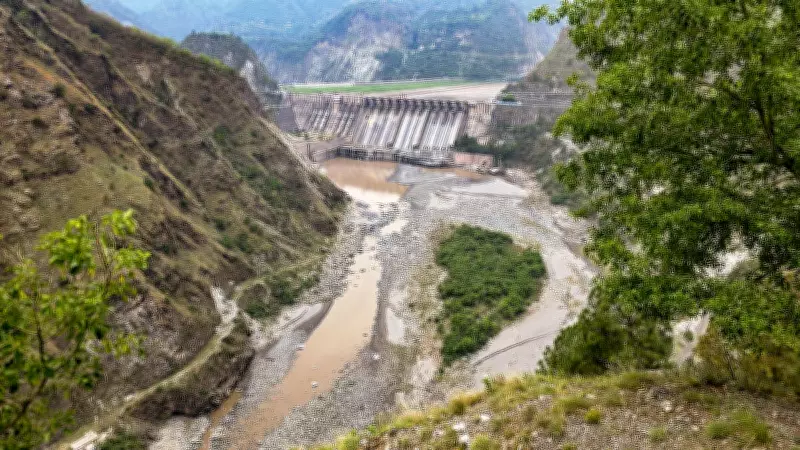
The Indus Waters Treaty governs the sharing of water from the Indus River system between India and Pakistan. Disputes over two hydroelectric projects in Jammu and Kashmir led Pakistan to invoke the treaty's arbitration mechanism in 2016. The PCA ruled in July 2023 that India's projects did not violate the treaty, but Pakistan contested this interpretation.
India's rejection marks a significant escalation in the water-sharing dispute. The MEA noted that the treaty's mechanisms have been misused by Pakistan to advance its political agenda, and India will not be bound by decisions that ignore the fundamental breach of the treaty's terms.
Implications for Bilateral Relations
Analysts suggest that this move could further strain India-Pakistan relations, already tense over Kashmir and terrorism. India has consistently called for a review of the treaty in light of changing circumstances, including population growth and climate change impacts on water availability.
The MEA reiterated India's commitment to peaceful resolution of disputes but emphasized that no agreement can be effective when one party engages in acts of aggression and terrorism against the other. India will continue to defend its national interests and water security.