The Israeli military announced on Sunday that it had successfully targeted and eliminated three terrorists in a recent operation. Among those killed was a notable operative of the Iran-backed militant group Hezbollah, who was reportedly serving within a Lebanese military intelligence unit at the time of the strike.
Details of the Targeted Strike
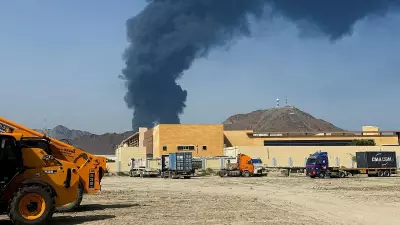
The Israel Defence Forces (IDF) confirmed the operation, stating it was carried out by an aircraft under the guidance of ground forces. The strike took place in the area of Aitaroun in southern Lebanon. The primary target was a terrorist cell that the IDF said was actively planning to launch anti-tank missiles towards Israeli territory from the region.
The most significant revelation was the identity of one of the eliminated individuals. He was a member of Hezbollah's elite Radwan Force and was concurrently serving in an intelligence unit of the Lebanese military. This detail underscores the complex and intertwined nature of militant and state actors in the ongoing border conflict.

Escalation on the Lebanon-Israel Border
This incident is part of a significant escalation of hostilities along the Lebanon-Israel frontier. The clashes began shortly after the outbreak of the Israel-Hamas war on October 7 last year. Hezbollah, a staunch ally of Hamas, has engaged in near-daily exchanges of fire with Israeli forces in solidarity with the Palestinian group.
The conflict has resulted in substantial casualties on both sides. In Lebanon, more than 350 people have been killed, the majority of whom are Hezbollah fighters, but the toll also includes over 50 civilians. On the Israeli side, the fighting has claimed the lives of at least 10 civilians and 12 soldiers. The violence has also led to the displacement of tens of thousands of people from communities on both sides of the border, creating a humanitarian crisis in the region.
Implications and Regional Tensions
The killing of a Hezbollah operative who was also part of a formal Lebanese military structure is a highly sensitive development. It raises serious questions about the penetration of militant influence within state institutions and complicates the already volatile situation. Israel has repeatedly warned that it will not tolerate Hezbollah's military presence near its northern border, viewing it as an imminent threat.
This targeted strike demonstrates Israel's continued intelligence-gathering capabilities and its willingness to conduct pre-emptive operations against perceived threats. The action is likely to provoke a response from Hezbollah, potentially leading to another round of intensified fighting. The situation continues to pose a grave risk of spiraling into a wider, full-scale war between Israel and Hezbollah, which would have devastating consequences for Lebanon and regional stability.
International efforts to mediate a ceasefire and establish a buffer zone have so far failed to gain traction. The ongoing conflict remains one of the most dangerous flashpoints in the Middle East, with global powers closely monitoring the potential for further escalation.