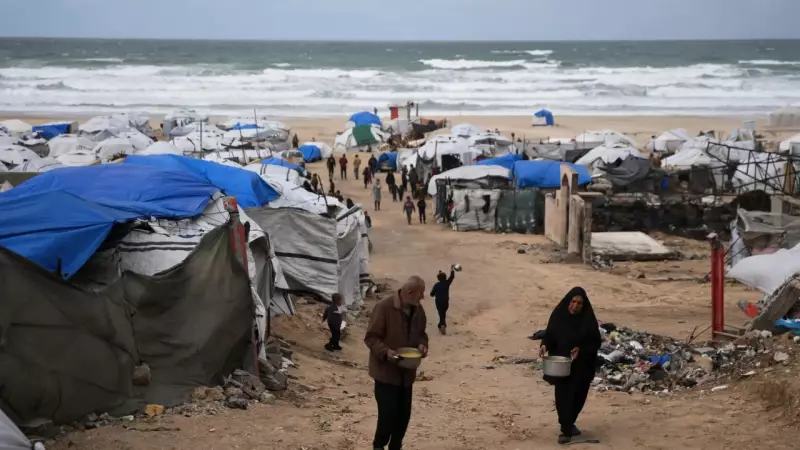
Torrential rains over the weekend have plunged the already devastated Gaza Strip into a new crisis, turning makeshift displacement camps into muddy swamps and claiming more lives. Palestinians, displaced by two years of war, are struggling to survive in frayed tents as freezing floodwaters rise.
Life in Ankle-Deep Floodwaters
Heavy downpours lashed the coastal enclave, flooding countless tents with ankle-deep, muddy water. In camps like the one in Khan Younis, fragile shelters propped up with old wood were inundated. Blankets and mattresses were soaked, and children in flip-flops waded through freezing puddles that turned dirt roads into rivers. Desperate residents used shovels in a futile attempt to push water out of their homes.
"We drowned last night," said Majdoleen Tarabein, displaced from Rafah. She described puddles forming, a bad smell, and her tent flying away. "We don't know what to do or where to go." Her family tried to wring soaked, mud-covered blankets dry by hand.

Eman Abu Riziq, also in Khan Younis, pointed to a puddle outside her tent. "When we woke up in the morning, we found that the water had entered the tent. These are the mattresses - they are all completely soaked. My daughters' belongings were soaked." Her family's hardship is compounded by the recent death of her husband.
Mounting Death Toll and Crumbling Shelters
The health consequences are severe. Gaza's Health Ministry, part of the Hamas-run government, reports that at least 12 people, including a 2-week-old infant, have died since December 13 from hypothermia or weather-related collapses of war-damaged homes. Emergency workers warn people not to stay in damaged buildings, but with few alternatives, many have no choice.
The scale of destruction leaves little refuge. The United Nations Satellite Center estimated in July that almost 80% of buildings in Gaza have been destroyed or damaged. Since the ceasefire between Israel and Hamas began on October 11, the Health Ministry states that 414 people have been killed and 1,142 wounded in Gaza. The overall Palestinian death toll from the war has risen to at least 71,266. The ministry's counts, viewed as generally reliable internationally, do not distinguish between militants and civilians.
Aid Shortfall and Political Stalemate
Humanitarian aid is failing to meet the enormous need. An Associated Press analysis of Israeli military figures shows deliveries are falling far short of the amounts outlined in the U.S.-brokered ceasefire. While Israel's aid coordination body said 4,200 trucks of humanitarian aid, plus tents and winter clothing, entered Gaza in the past week, it refused to detail tent numbers.
International aid groups say the need is far greater. The Shelter Cluster reports that since the ceasefire began, approximately 72,000 tents and 403,000 tarps have entered—a fraction of what's required for over a million displaced people.
Philippe Lazzarini, commissioner-general of the main U.N. aid group in Gaza, wrote on X: "Harsh winter weather is compounding more than two years of suffering... Aid supplies are not being allowed in at the scale required."
Meanwhile, political progress is slow. Israeli Prime Minister Benjamin Netanyahu traveled to Washington to meet U.S. President Donald Trump about the ceasefire's second stage. Israel refuses to move forward while the remains of the final hostage from the October 7, 2023 attack are still in Gaza. Challenges include deploying an international force, creating a governing body for Gaza, disarming Hamas, and further Israeli troop withdrawals. Both sides continue to accuse each other of truce violations.