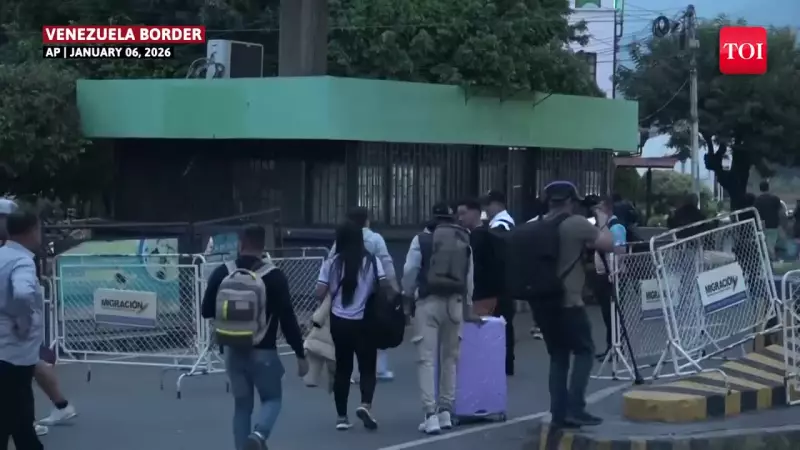
The political landscape in Venezuela has taken a dramatic and repressive turn following the capture of former President Nicolás Maduro by United States forces. In a move that has alarmed international rights groups, at least 14 journalists were briefly detained in the capital, Caracas, while covering the fallout of this seismic event.
Press Crackdown Amid Political Transition
According to Venezuela's journalists' union, the detentions occurred as the nation grappled with the power vacuum created by Maduro's seizure. The majority of those held were reporters working for foreign media outlets. They reported intrusive searches, with authorities examining their phones and seizing their professional equipment. The crackdown escalated to the point where one journalist was deported from the country, signaling a harsh stance against international press coverage.
Rodriguez's Swearing-In and US Relations
This suppression of media freedom unfolded concurrently with a significant political development. Delcy Rodríguez, the former vice president, was sworn in as the interim president of Venezuela. In a notable shift from the previous administration's rhetoric, Rodríguez indicated a willingness to cooperate with Washington, potentially opening a new chapter in Venezuela-US relations following years of tension and sanctions.

However, human rights organizations warn that the detentions are not an isolated incident but a reflection of a broader pattern of growing repression. They point to an environment of fear maintained through armed patrols on the streets, increased surveillance, and the continued imprisonment of hundreds of political detainees across the country.
International Repercussions and Warnings
The situation has drawn sharp reactions from global powers. China's leader, Xi Jinping, has reportedly warned the US against "acting like the world's cop," highlighting the geopolitical tensions surrounding Venezuela's crisis. Meanwhile, the context of Maduro's capture remains a point of intense debate, with the US Justice Department having previously dropped a key narcoterrorism charge that facilitated the operation under the Trump administration's policy.
As Delcy Rodríguez consolidates her interim presidency, the world watches closely. The targeting of foreign journalists raises serious questions about the new administration's commitment to democratic principles and a free press, even as it seeks to recalibrate its relationship with the United States. The coming days will be critical in determining whether this marks a genuine transition or merely a change in leadership style within an authoritarian framework.