West Asia Conflict Enters New Phase with Desalination Plants Under Attack
The ongoing conflict in West Asia is intensifying as desalination plants, crucial for providing drinking water across the Gulf region, are now becoming targets in the escalating confrontation involving Iran, the United States, and Israel. This shift marks a significant expansion of the conflict beyond traditional military and energy infrastructure, raising alarms about potential humanitarian crises.
Recent Attacks on Water Infrastructure
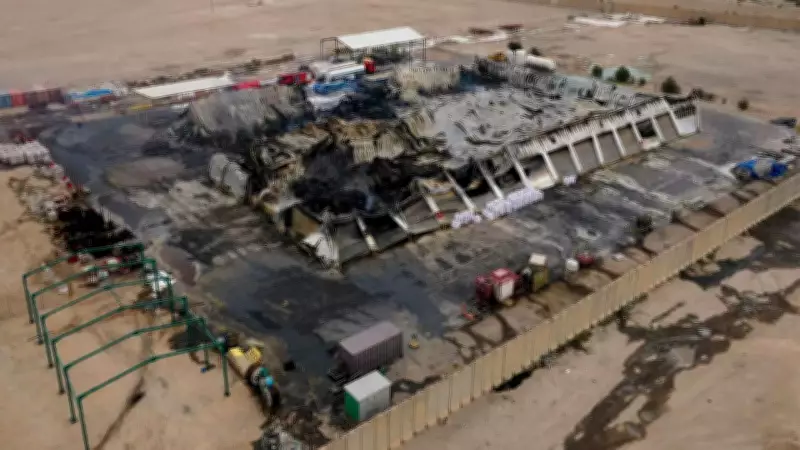
Bahrain reported on Sunday that an Iranian drone strike caused material damage to a water desalination plant in the country. According to The New York Times, Bahrain's interior ministry confirmed the damage but stated that water supply was not disrupted. The country's water and electricity authority assured that there had been no impact on water supplies or network capacity.
This incident followed accusations by Iran that the United States attacked a freshwater desalination plant on Qeshm Island in southern Iran. Iranian Foreign Minister Abbas Araghchi claimed the strike affected water supply in 30 villages, warning that targeting Iran's infrastructure is a dangerous move with grave consequences. The US has denied responsibility, with US Central Command spokesperson Captain Tim Hawkins stating American forces were not involved.

Expansion Beyond Oil Targets
The conflict, which began on February 28 after US and Israeli strikes on Iran's nuclear and military sites, initially focused on energy infrastructure like oil refineries and gas plants, driving up global oil prices. However, recent days have seen incidents near water facilities, including attacks near Dubai's Jebel Ali port, close to a major desalination plant, and damage reported at facilities in the UAE and Kuwait from nearby strikes or debris.
Importance of Desalination in the Gulf
Desalination plants are vital for converting seawater into drinking water, using technologies such as reverse osmosis to remove salt and impurities. In the water-scarce Gulf region, these facilities are essential, with over 400 plants along the Arabian Gulf coast. Gulf Cooperation Council countries produce nearly 40% of the world's desalinated water, accounting for about 60% of global capacity.
Dependence on desalinated water is high: approximately 42% in the UAE, 90% in Kuwait, 86% in Oman, and 70% in Saudi Arabia. A 2020 report by the Gulf Research Center indicates that groundwater and desalinated water together provide about 90% of the region's main water resources.
Strategic Vulnerabilities and Humanitarian Risks
Experts warn that targeting desalination plants poses a critical vulnerability during conflicts. Naser Alsayed, an environmental researcher, told Al Jazeera that disrupting these facilities risks economic stability and growth, as they are the main freshwater source for many Gulf states, with strong humanitarian implications for daily life.
Abdullah Baabood, an Omani academic, emphasized to The New York Times that attacking such infrastructure represents a serious escalation, turning military confrontations into direct threats to civilian survival by jeopardizing drinking water for millions.
Risks of Wider Disruption
The Gulf's heavy reliance on desalination means that even limited damage could quickly disrupt water supplies. A 2010 CIA analysis highlighted that attacks on this infrastructure could trigger national crises in several Gulf countries. While some states have built resilience through storage and pipelines, smaller nations like Bahrain, Qatar, and Kuwait remain more vulnerable due to limited backup options.
Raha Hakimdavar, a hydrologist at Georgetown University in Qatar, noted to Al Jazeera that damage to water infrastructure could also impact food security and economic stability in the region. As tensions persist, analysts observe that the shift from oil targets to water facilities underscores how essential services are becoming integral to the strategic landscape of the expanding conflict.