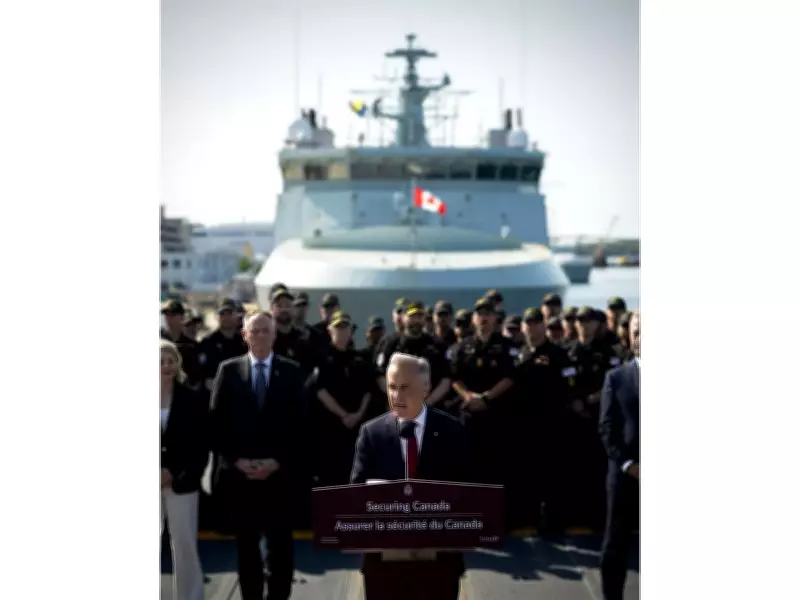
Canadian Prime Minister Mark Carney announced on Tuesday that Canada has selected German manufacturer Thyssenkrupp Marine Systems (TKMS) as the preferred supplier for its next fleet of submarines, describing the project as the largest defence procurement in the country's history. The announcement was made via a post on X, where Carney emphasized the strategic and economic benefits of the deal.
Details of the Procurement
Canada plans to acquire up to 12 submarines to replace its aging fleet of four boats. The contract is expected to be finalized by the end of next year, with the first four submarines scheduled for delivery by 2034. TKMS, majority-owned by German industrial group Thyssenkrupp, submitted its bid jointly with Norway and was selected over South Korea's Hanwha Ocean after months of competition.
According to Al Jazeera, Canada's The Globe and Mail estimated the submarine acquisition could cost between 20 billion and 30 billion Canadian dollars (USD 14 billion to USD 21 billion), while the total lifetime cost, including operations, maintenance and upgrades, could reach between 40 billion and 50 billion Canadian dollars (USD 28 billion to USD 35 billion). Carney did not reveal the financial value of the proposed deal.

Strategic and Economic Impact
Carney stated that the agreement would strengthen Canada's strategic capabilities while creating significant economic benefits for Canadian workers and industries. "In a more dangerous and divided world, Canada must be prepared to defend our interests, protect our citizens, build our economy, and secure our future," he said ahead of his visit to Turkiye for the NATO leaders' summit, as reported by Al Jazeera. "Together with our German and Norwegian Allies, we will build at speed and scale to expand our strategic capabilities and create greater strategic autonomy. We will build this fleet to build Canada strong."
The announcement was welcomed by German Chancellor Friedrich Merz, who described the procurement as a strong signal of transatlantic and European cooperation. "This is a strong signal for our transatlantic and European partnership: Canada is procuring German-Norwegian 212CD-class submarines. Thank you for your trust, @MarkJCarney and @jonasgahrstore," he wrote on X.
NATO Context and Defence Spending
Canada has faced continued pressure from US President Donald Trump to increase defence spending, similar to other NATO allies. The country has since achieved NATO's target of spending 2 per cent of its gross domestic product (GDP) on defence ahead of schedule. NATO member states have also agreed to raise defence and security-related spending to 5 per cent of GDP by 2035. Shares of TKMS closed 11 per cent higher following the announcement, Al Jazeera reported.
Germany, Norway and Canada are all members of NATO, and the submarine deal is seen as a further strengthening of alliance cooperation.