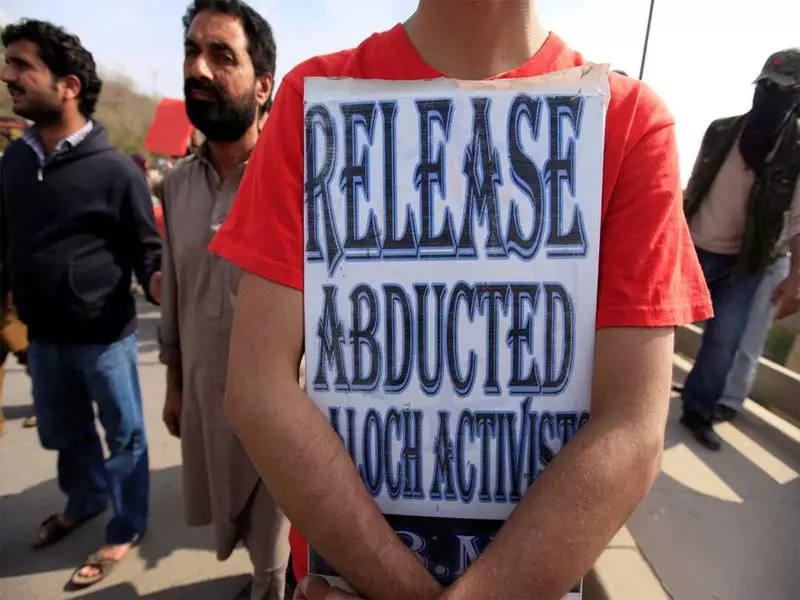
In a powerful display of anguish and desperation, families of individuals who have vanished in Pakistan's restive Balochistan province have launched a protest in the regional capital, Quetta. The sit-in, which began on a recent Friday, spotlights the long-standing and contentious issue of enforced disappearances, pushing a severe human rights crisis back into the national and international spotlight.
The Heart of the Protest: Voices from the Sit-in
The protestors, primarily women and children, have set up camp outside the Quetta Press Club. They hold photographs of their missing loved ones—fathers, brothers, sons—whose fates remain unknown. The demonstrators are demanding immediate answers from the Pakistani government and its security agencies. Their core demand is straightforward yet profound: the safe recovery and return of their family members or, at the very least, credible information about their whereabouts and legal proceedings if any charges exist.
This is not an isolated incident but part of a persistent pattern in Balochistan. For years, human rights organizations have documented cases where individuals, often political activists, students, and journalists, are allegedly picked up by security forces only to disappear without a trace. The state typically attributes these disappearances to militant groups or labels the missing as having joined separatist outfits, claims that protesting families vehemently reject.

A Crisis of Accountability and Government Response
The protest in Quetta underscores a critical failure of state mechanisms. Despite numerous judicial inquiries and commissions, tangible progress in resolving these cases has been painfully slow. The protestors accuse authorities of employing delay tactics, obfuscation, and outright intimidation to silence their pleas for justice.
While the provincial and federal governments have occasionally formed committees to investigate, families report that these efforts yield little to no results. The lack of transparency and accountability perpetuates a climate of fear and impunity. The ongoing sit-in symbolizes a breakdown in trust between the citizens of Balochistan and the state institutions mandated to protect them.
Broader Implications: A Humanitarian and Political Challenge
The ramifications of this crisis extend far beyond the immediate grief of the affected families. It fuels deep-seated resentment and alienation in Balochistan, a province already grappling with a complex insurgency and complaints of economic neglect and political marginalization. The issue of missing persons has become a central rallying point for Baloch nationalist movements and a significant stain on Pakistan's human rights record internationally.
International human rights bodies, including the United Nations Working Group on Enforced or Involuntary Disappearances, have repeatedly expressed concern about the situation in Pakistan, with Balochistan featuring prominently in their reports. The continuous protests serve as a stark reminder to the global community of the unresolved and urgent nature of this humanitarian emergency.
In conclusion, the quiet yet determined protest in Quetta is a loud cry for justice. It represents the human cost of a policy that has left hundreds of families in agonizing limbo. Until the Pakistani state addresses these grievances with seriousness, transparency, and a genuine commitment to the rule of law, the cycle of protest and despair in Balochistan is likely to continue, further destabilizing an already volatile region.