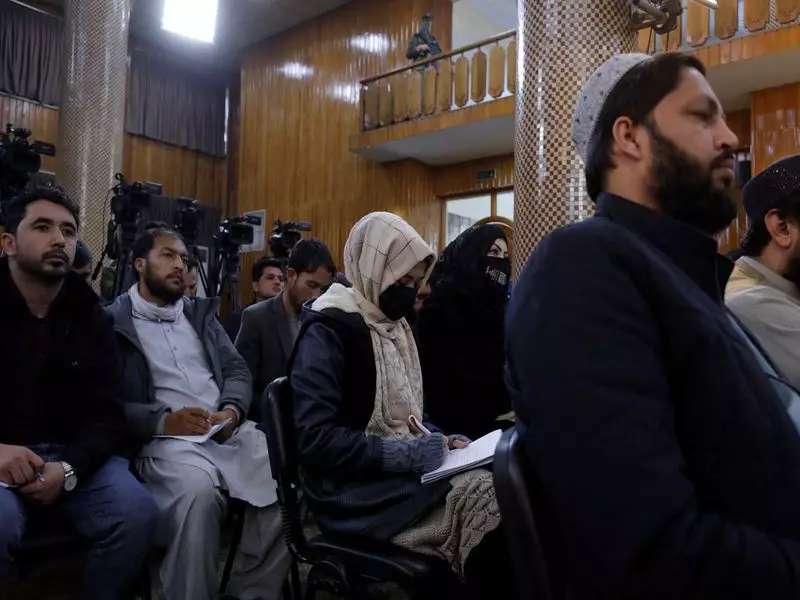
Journalists across Afghanistan are raising alarm over what they describe as a systematic and crippling restriction on their ability to access timely information from the country's ruling Taliban authorities. This growing crisis is severely hampering news reporting and undermining the fundamental principles of a free press in the war-torn nation.
Systematic Delays and Opaque Channels
A recent report from the media advocacy group Nai Supporting Open Media has brought this critical issue to the forefront. The findings, based on a comprehensive survey, reveal a disturbing pattern where government departments and officials consistently fail to provide information to reporters in a timely or useful manner. Instead of established, transparent channels, journalists are often forced to rely on informal contacts or social media for official news, a method fraught with inaccuracy and inconsistency.
The core of the problem lies in the absence of designated spokespersons or information officers in most ministries and government bodies. When journalists do manage to identify a contact, their inquiries are frequently met with silence, indefinite delays, or outright refusal. This bureaucratic stonewalling makes it nearly impossible to report accurately on government activities, policy changes, or pressing national issues.

Direct Accounts from the Frontlines
Journalists on the ground have shared firsthand accounts of this stifling environment. Abdul Haq Hamidi, the head of a journalists' union in the northern province of Kunduz, stated that media workers in his region face significant hurdles in obtaining information. He confirmed that officials rarely respond to queries, forcing reporters to publish stories without crucial official input or perspective.
Echoing this sentiment, Sedaqat Ghafori, a journalist based in the eastern province of Khost, highlighted the dangerous reliance on social media. He pointed out that when government departments do announce news, it is often done exclusively through platforms like Facebook or X (formerly Twitter), without any prior notification or access granted to professional journalists. This practice not only sidelines the media but also raises serious concerns about the verification and depth of information reaching the public.
A Climate of Fear and Self-Censorship
The lack of access is compounded by an atmosphere of intimidation. The Nai report underscores that these restrictive practices are fostering a climate of fear and promoting self-censorship among the press corps. Journalists, uncertain of the consequences of persistent questioning, may choose to avoid sensitive topics altogether. This chilling effect represents a grave threat to democratic discourse and public accountability.
While the Taliban administration has issued directives aimed at regulating media operations, the practical reality for journalists is one of obstruction rather than facilitation. The gap between official decrees and their implementation on the ground is vast, leaving media professionals in a precarious and vulnerable position. The situation signals a continued erosion of press freedoms since the Taliban's return to power in August 2021, reversing gains made in the previous two decades.
Implications for Afghanistan's Future
The consequences of this information blackout extend far beyond the newsroom. An uninformed public is unable to participate meaningfully in societal matters or hold power to account. Accurate journalism is essential for documenting the country's direction, humanitarian needs, and the realities of life under the current regime. By stifling the flow of information, the authorities are not just controlling the narrative but also isolating the Afghan people from the world and from each other.
International press freedom organizations continue to list Afghanistan as one of the most dangerous and difficult places for journalists to work. The latest complaints regarding information access add a critical layer of structural suppression to the existing physical threats. The future of a viable independent media in Afghanistan now hinges on the Taliban's willingness to establish clear, reliable, and open lines of communication with the press, a move that currently seems unlikely without sustained internal pressure and global attention.