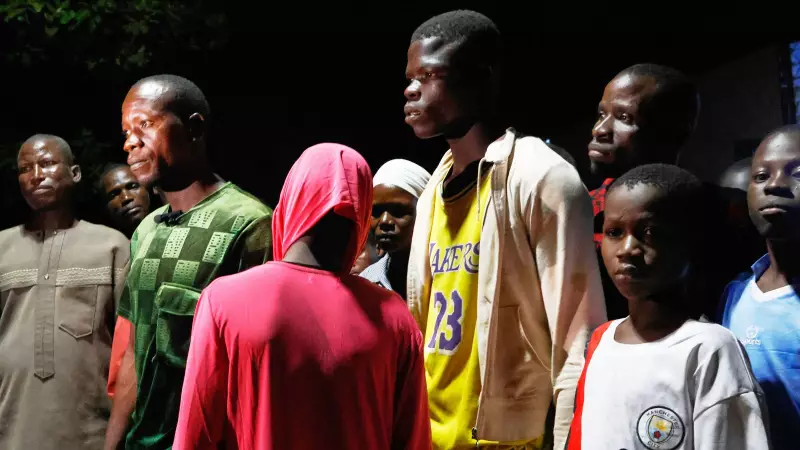
In a significant development, Nigerian authorities have secured the release of 130 individuals, including schoolchildren and staff members, who were kidnapped from their school in the country's northwest last month. The victims, taken from the LEA Primary and Junior Secondary School in Kuriga, Kaduna state, have now been freed after weeks of captivity.
The Harrowing Abduction and Eventual Release
The incident that sparked nationwide and international concern occurred on March 7, 2024. Armed men, locally referred to as bandits, stormed the school premises in Kuriga, a town in the volatile Chikun district of Kaduna state. The attackers initially seized a large group before some managed to escape. The final count confirmed by police stated that 130 victims, comprising 102 pupils and 28 staff members, were taken into the nearby forests.
After intense pressure and negotiations, the victims were finally released on a recent Sunday. Nigeria's police force and the state governor, Uba Sani, confirmed the news. Governor Sani announced that the abducted individuals were recovered following a coordinated security operation. He expressed gratitude to Nigeria's President, Bola Tinubu, for prioritizing the safe return of the captives and for not acquiescing to the kidnappers' demands for ransom.

A Deep-Rooted Security Crisis
This abduction is not an isolated event but part of a persistent and severe security challenge plaguing northern Nigeria. Criminal gangs, commonly known as bandits, frequently attack villages, steal cattle, and kidnap residents for ransom. Schools have become soft targets, with hundreds of students taken in recent years. The situation echoes the infamous 2014 Chibok schoolgirls' abduction by Boko Haram insurgents, which saw over 200 girls seized.
The release of the Kuriga schoolchildren brings temporary relief but underscores a grim reality. Just two days prior to this release, another kidnapping occurred in Gidan Bakuso, Sokoto state, where 15 children were taken from an Islamic school. Furthermore, earlier in March, over 200 people, mostly women and children, were kidnapped by Boko Haram from the Ngala camp for displaced persons in Borno state. These consecutive incidents highlight the widespread nature of the insecurity.
Implications and the Road Ahead
The successful release, achieved reportedly without a cash ransom, is being hailed as a tactical victory by the authorities. However, it does little to quell the deep-seated fears of communities living in these regions. The frequency of such attacks raises serious questions about the protection of educational institutions and the safety of children in conflict-prone zones.
Analysts point out that the underlying issues fueling this crisis—including poverty, unemployment, and weak governance—remain largely unaddressed. While security operations continue, there is a growing call for a more comprehensive strategy that combines military action with socio-economic development initiatives to deter young people from joining criminal gangs. For the families in Kuriga, the return of their children marks the end of a nightmare, but for Nigeria, the struggle to secure its citizens and their future continues.