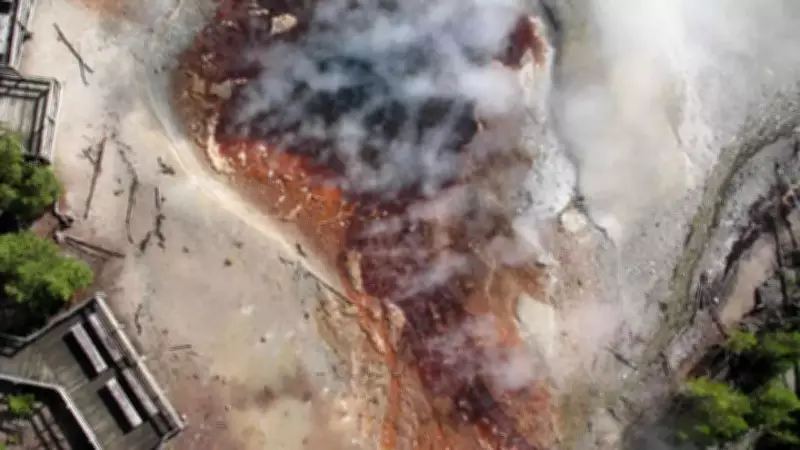
Yellowstone's Echinus Geyser Roars Back to Life After Six-Year Hiatus
The ground at Yellowstone National Park never truly rests, often biding its time for years before dramatically reawakening. This geological patience has been spectacularly demonstrated by Echinus Geyser, the planet's largest acidic geyser, which has violently erupted back into action following nearly six years of relative quiet.
Visitors to the iconic park are now witnessing formidable jets of steaming, acidic water shooting up to 30 feet into the Wyoming sky. According to scientific observations, this resurgence represents the geyser's most vigorous and consistent display of power since its previous active phase in 2017. For a landscape already celebrated for its breathtaking geothermal wonders, this revival carries profound significance, serving as a potent reminder that Yellowstone's terrain is in perpetual, dynamic flux, even during periods of surface calm.
The Unique and Spiky Character of Echinus Geyser
Echinus Geyser defies the stereotypical cone-shaped image of a geyser. It features a broad, expansive pool approximately 66 feet in diameter, encircled by sharp, jagged silica formations. These spiky structures bear a striking resemblance to sea urchins, which inspired the geyser's name. During its active cycles, it erupts every few hours, propelling acidic water between 20 and 30 feet skyward.

While not the tallest geyser in Yellowstone, the visual spectacle of its steaming column rising from a vibrantly colored pool is undeniably arresting. The brilliant red, orange, and yellow hues framing the rim are created by mineral deposits, including iron, aluminum, and arsenic. Despite its fierce appearance, experts clarify that the water's acidity level is comparable to common household liquids like vinegar or orange juice. It presents a far more menacing visage than its actual chemical threat, though the water remains scalding hot.
The Delicate Chemistry Enabling Acidic Eruptions
The existence of Echinus as a geyser is a geological rarity. Most acidic hot springs fail to evolve into erupting geysers because their chemistry typically undermines the necessary underground infrastructure. Strong acids usually dissolve the critical silica structures that trap steam and build the pressure required for forceful eruptions, resulting in mere surface bubbling instead.
Echinus maintains a precarious equilibrium between neutral groundwater and rising acidic gases from deeper sources. Scientists theorize this unique blend preserves the essential underground plumbing system while still facilitating regular, powerful eruptions. Park officials note this unusual chemistry also generates the geyser's distinctive, colorful mineral patterns. Due to this rare confluence of factors, large acidic geysers like Echinus are exceptionally scarce globally.
Decades of Fluctuating Eruption Patterns
Echinus Geyser has exhibited variable behavior over the past decades. In the 1970s, it erupted with clockwork regularity at intervals of 40 to 80 minutes. Its power intensified during the 1980s and 1990s, with some eruptions soaring up to 75 feet high and lasting over 90 minutes. Activity then diminished significantly in the early 2000s.
By December 2020, the geyser had fallen silent once more. In early February 2026, United States Geological Survey scientists detected rising temperatures in runoff channels, signaling renewed subterranean movement. Visible eruptions promptly recommenced. The current cycle features bursts reaching 20 to 30 feet, lasting approximately two to three minutes each. Researchers indicate this pattern closely mirrors the geyser's 2017 reactivation.
Geyser Activity Sparks Interest Amid Assurances of Stability
The resurgence of Echinus coincided with an eruption from Steamboat Geyser, the world's tallest active geyser. This timing fueled speculation among some observers about potential volcanic unrest. However, geologists have emphatically stated there is no evidence of increased volcanic threat.

In February, Yellowstone recorded 74 minor earthquakes, the largest measuring a mere 2.4 in magnitude. Experts explain that geyser eruptions are primarily governed by shallow underground water systems and seasonal variations, not by magma movement. According to scientific consensus, Yellowstone's overall volcanic activity remains at normal, background levels.
Critical Safety Warnings for Park Visitors
While the renewed eruptions attract photographers and nature enthusiasts, park authorities are issuing stern safety reminders. Echinus Geyser's water temperatures can exceed 200 degrees Fahrenheit, capable of causing instant, severe burns. The ground within the Norris Geyser Basin is notoriously thin and unstable.
Visitors are strongly urged to stay exclusively on designated boardwalks. Although the colorful pools may appear inviting, the terrain is unpredictable and potentially hazardous. For now, Echinus Geyser is delivering another dramatic performance, underscoring Yellowstone's ever-evolving nature and reinforcing the concept that this extraordinary landscape is continuously transforming beneath our feet.