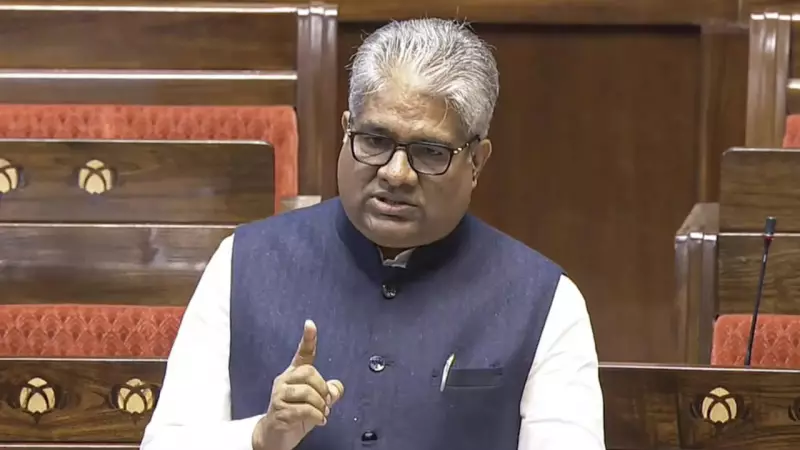
Union Environment Minister Bhupender Yadav delivered a clear message to India's real estate developers on Friday, stating that the government's focus on 'ease of doing business' will not come at the expense of crucial environmental protections. Simultaneously, he assured that environmental clearances should not lead to unnecessary project delays.
Development and Environment as Complementary Goals
Addressing the national conclave of the Confederation of Real Estate Developer Associations of India (CREDAI) in New Delhi, with Union Home Minister Amit Shah as the chief guest, Yadav stressed that sustainability is now the essential foundation for future-ready development. He articulated that development and environmental conservation are not opposing forces but complementary objectives that must advance in tandem.
The minister emphasized that for this synergy to work, environmental considerations must be integrated at the very initial stages of project planning. He declared that sustainable practices are no longer an optional add-on but a mandatory component of responsible growth.

Real Estate Pivotal for India's Climate Commitments
Yadav pointed out the substantial impact the real estate sector has on key environmental parameters, including energy consumption, water use, waste generation, air quality, and the urban heat island effect. Given this significant footprint, he positioned the industry as central to achieving India's climate commitments, notably the ambitious target of reaching Net Zero emissions by 2070.
He called upon developers to take a leadership role by proactively adopting:
- Energy-efficient architectural designs and renewable energy integration.
- Water-positive development strategies to conserve resources.
- Circular construction practices that minimize waste.
- Green building certifications that add long-term value for both cities and residents.
Call for Climate-Resilient Urban Planning
Noting the increasing frequency of climate change impacts on urban centers, such as floods and heatwaves, Minister Yadav advocated for a shift towards climate-resilient urban planning. He outlined the need for specific adaptations:
These include designing flood-resilient layouts, using heat-adaptive construction materials, significantly increasing urban green cover, and promoting sustainable mobility solutions to reduce pollution and congestion.
On governance, Yadav outlined key reforms by his ministry to modernize environmental regulation. These efforts focus on strengthening clearance mechanisms, promoting digital and tech-driven systems, and adopting a risk-based approach to regulation. He also highlighted the advancement of initiatives like Mission LiFE (Lifestyle for Environment) and the Green Credit Programme, alongside reinforcing air and water quality monitoring frameworks in cities.
Concluding with a reassurance to the industry, the minister stated the government's intent is to reward compliance and efficiency while dealing firmly with any environmental violations. This balanced approach aims to foster responsible growth that safeguards the nation's ecological future.