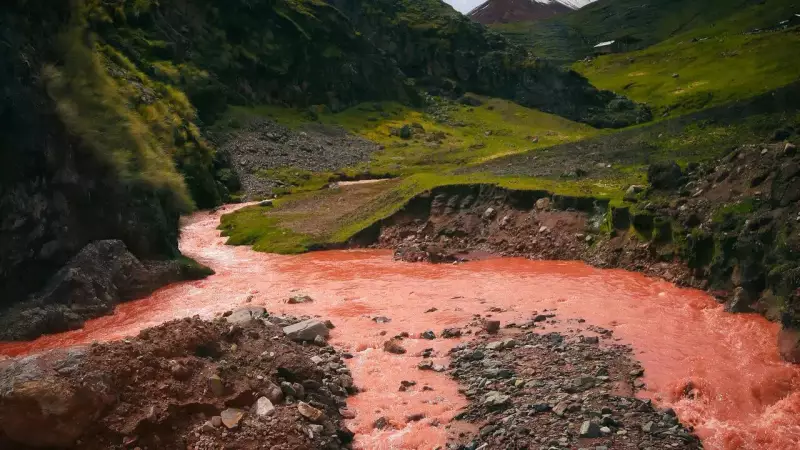
Every year, the powerful southwest monsoon transforms India's landscape, and its river systems are no exception. One of the most visually striking changes is the dramatic shift in water colour, with certain rivers taking on a distinct reddish hue. This phenomenon is not a mystery but a direct and well-understood consequence of the seasonal rains interacting with the country's unique geology and climate.
The Monsoon's Power: Unleashing a Torrent of Sediment
The primary driver behind the colour change is the monsoon's immense power to increase river flow and stir up sediment. Between June and September, rainfall rates escalate dramatically across the subcontinent. This leads to countless streams and tributaries swelling and emptying into major rivers, causing water discharge to surge.
This sudden influx of water significantly increases the river's speed and turbulence. The agitated water gains a much greater capacity to pick up and suspend solid material compared to the drier seasons. Studies, such as the comprehensive research by Subramanian and Ramanathan on Himalayan rivers, establish that monsoon discharge can transport hundreds of millions of tons of sediment annually. During this period, the suspended load is dominated by fine particles like silt and clay, which remain aloft due to the constant churning. This material scatters light, making the water appear murky and progressively reddish-brown as its concentration rises.

The Source of the Red: Iron-Rich Soils of Eastern India
The specific red colour is intimately linked to the geography of the river basins. Vast areas of eastern and northeastern India are composed of land with high concentrations of iron oxide within decomposed rock formations and laterite soils. These soils get their characteristic red and brown colour from this iron content, especially under tropical conditions.
The heavy monsoon rains loosen these iron-rich layers, washing them down slopes and into the network of streams and rivers. Even small concentrations of these iron-coated particles can strongly influence the water's colour. Unlike coarse sand, the fine lateritic material stays suspended for extended periods. As numerous tributaries contribute this sediment simultaneously, the red colouration becomes evident over long stretches of the main river, persisting throughout the season.
Amplifying Erosion: Nature and Human Activity
While natural erosion increases abruptly with monsoon rains, human land use plays a significant role in the amount of sediment reaching the rivers. Before the rains, dry spells leave the soil in the basin loose and vulnerable. The onset of intense rainfall then displaces this soil far more effectively than gentle showers could.
Human activities exacerbate this process. Agricultural land prepared for cultivation, unpaved embankments, settlements, and transport routes all contribute to soil instability. When vegetation cover is inadequate, the soil is easily flushed by excess water into drainage channels, significantly boosting sediment input into the river systems.
A Lingering Hue: Why the Colour Persists
Once the sediment enters the river, its journey depends on the flow intensity and the river channel's characteristics. The high flow rates during peak monsoon prevent fine sediments from settling, keeping them suspended throughout the river's cross-section. This ensures the red hue is distributed along the river's length, sometimes reaching all the way to deltaic regions.
Even after local rainfall decreases, sediment input from upstream sources can remain high enough to maintain the coloured water for weeks. Furthermore, wider sections of the river downstream slow sedimentation by dispersing the water's energy, which helps maintain turbulence and keeps particles suspended. The transition back to clearer water is gradual, occurring only when water levels drop sufficiently for sediment to settle on floodplains and the riverbed.

This annual reddening is a recurring natural event, though its intensity varies each year. The level and geographical distribution of monsoon rainfall directly influence how pronounced the effect will be. On a larger timescale, this massive movement of sediment is a crucial geological process, responsible for creating fertile floodplains, regenerating soil nutrients, and building deltaic landforms. The red water of the monsoon, therefore, is a visible sign of the river actively engaged in its natural cycle, moving earth materials in response to the powerful forces of the Indian climate.