Urban Heat Island Effect Intensifies Post-Monsoon Heat
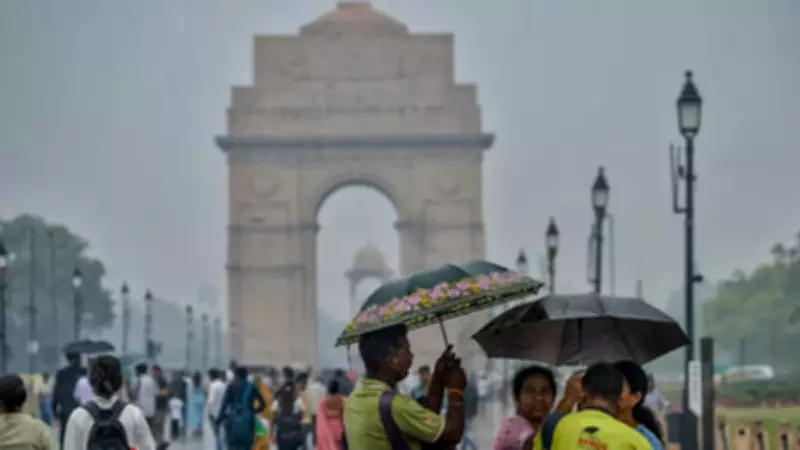
Indian cities are feeling hotter than usual even after the monsoon has arrived, a phenomenon driven primarily by the urban heat island (UHI) effect. According to a recent analysis by climate researchers, the combination of dense concrete structures, reduced vegetation, and waste heat from vehicles and air conditioners traps heat in urban areas, making them significantly warmer than surrounding rural regions.
The India Meteorological Department (IMD) has recorded that maximum temperatures in cities like Delhi, Mumbai, and Bengaluru are 2-4 degrees Celsius higher than in nearby non-urban areas during the monsoon season. This anomaly persists even when rainfall is normal, indicating that urbanization is altering local climate patterns.
Role of Concrete and Asphalt in Heat Retention
One major factor is the widespread use of concrete and asphalt, which absorb solar radiation during the day and release it slowly at night. This prevents cities from cooling down after sunset, leading to higher minimum temperatures. A study by the Indian Institute of Tropical Meteorology found that urban surfaces in Mumbai can be up to 10 degrees Celsius hotter than green spaces during the day.

"The materials we use for construction have high thermal mass and low albedo, meaning they store heat and reflect little sunlight," explains Dr. Anjali Sharma, a climate scientist at IIT Delhi. "This creates a dome of warm air over cities, which is not easily dissipated by monsoon winds."
Loss of Green Cover and Water Bodies
Rapid urbanization has led to the loss of trees and water bodies, which naturally cool the environment through shade and evaporation. Bengaluru, once known as the Garden City, has lost over 70% of its green cover in the last two decades, according to a report by the Karnataka State Remote Sensing Applications Centre. Similarly, Delhi has seen a 30% reduction in its forest area since 2000.
"Trees and lakes act as natural air conditioners. Their disappearance means cities lose their ability to regulate temperature," says Dr. Vikram Patel, an urban planner. "The monsoon rains, instead of cooling the city, often evaporate quickly from hot surfaces, adding humidity without relief."
Waste Heat from Air Conditioners and Vehicles
Air conditioners and vehicles release waste heat, further exacerbating the UHI effect. In cities like Chennai and Hyderabad, the number of air conditioning units has doubled in the last five years, leading to a feedback loop: as it gets hotter, more ACs are used, which in turn heats the outdoors. The Central Pollution Control Board estimates that ACs contribute up to 25% of the urban heat load in some areas.
"The heat emitted from AC condensers can raise local temperatures by 1-2 degrees Celsius," notes a 2023 study by the Energy and Resources Institute. "This is particularly problematic in densely packed residential areas."
Impact of Climate Change and Monsoon Patterns
Climate change is also making monsoon patterns more erratic, with longer dry spells between rain events. This allows heat to build up before the next rainfall. The IMD has observed that the number of "heatwave days" during the monsoon season has increased by 50% over the past 30 years in cities like Ahmedabad and Pune.
"The monsoon is no longer a reliable cooling agent," says Dr. Ramesh Kumar, a meteorologist. "When rain does come, it often falls on hot surfaces, leading to flash evaporation that does little to reduce ambient temperature."
Mitigation Strategies: Green Roofs and Cool Pavements
To combat urban heat, cities are exploring solutions like green roofs, cool pavements, and urban forestry. Ahmedabad has implemented a heat action plan that includes painting roofs white to reflect sunlight, while Delhi is experimenting with permeable pavements that retain moisture. The National Institute of Urban Affairs recommends increasing green cover to at least 30% of city area to effectively reduce temperatures.
"We need to redesign our cities to be climate-resilient," emphasizes Dr. Sharma. "Simple measures like planting trees along roads and using light-colored materials can lower temperatures by 2-3 degrees Celsius."