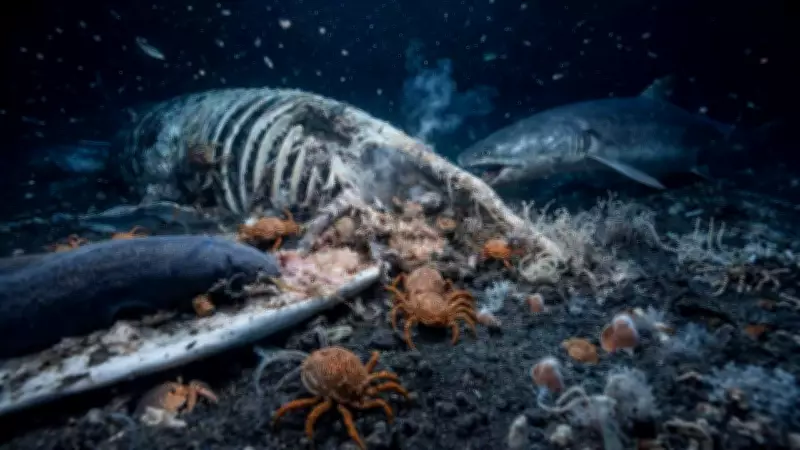
Whale Falls: Nature's Remarkable Deep-Sea Recycling System
In the profound darkness of the deep ocean, where sunlight never penetrates and nutrients are exceptionally scarce, life persists through extraordinary adaptations. Among the most fascinating natural phenomena is what occurs when a whale dies in the open sea. Rather than disappearing into the abyss, the massive carcass embarks on a transformative journey that creates a temporary but highly productive ecosystem on the ocean floor.
The Descent to the Deep
After death, a whale's body may initially float due to gases accumulated during life. However, it eventually loses buoyancy and begins a slow descent through various ocean depths, finally settling on the seabed. According to the National Oceanic and Atmospheric Administration, this process creates what scientists call "whale falls" – concentrated deposits of organic matter that become vital oases in otherwise nutrient-poor environments.
This phenomenon plays a crucial role in maintaining ecological balance in deep-sea regions where resources are extremely limited. The whale's massive body represents an unprecedented concentration of nutrients in an environment where organic matter typically arrives in tiny, scattered fragments.

The Arrival of Scavengers
The first organisms to discover the whale carcass are typically large scavengers. Deep-sea fish, crustaceans, and other mobile animals use their keen sense of smell to locate the food source in complete darkness. These initial visitors begin consuming the soft tissues of the whale, gradually decomposing the outer layers of the massive body.
This feeding phase can last for months or even years, depending on the size of the whale and the rate of consumption by scavengers. The arrival of these organisms transforms the quiet ocean floor into a bustling hub of biological activity.
Transition to Smaller Life Forms
As the soft tissues become depleted, smaller organisms take over the decomposition process. Worms, crustaceans, and various invertebrates congregate around the remaining organic matter and nutrient-rich sediments that have accumulated. During this stage, the surrounding seafloor becomes significantly enriched, supporting life in areas that would otherwise be virtually barren.
The whale fall essentially creates a temporary but highly productive ecosystem that sustains diverse marine organisms for extended periods.
Chemical Processes Sustain Life
Once the whale's bones become exposed, specialized bacteria begin decomposing them, releasing chemicals such as hydrogen sulfide into the surrounding environment. Remarkably, certain life forms utilize these chemicals as an energy source through a process called chemosynthesis, which functions independently of sunlight.
This creates yet another type of ecosystem where organisms form close symbiotic relationships to survive. The chemical-based community can persist for decades, making whale falls long-lasting food sources in the deep ocean.
Ecological Significance
Whale falls support an astonishing variety of life, from large scavengers to microscopic organisms. Some species have evolved specific adaptations to thrive in these unique ecosystems and may depend on whale fall events for their survival. These temporary oases also facilitate biological connectivity across otherwise isolated regions of the ocean floor.
The study of whale falls provides valuable insights into how life adapts to extreme conditions and maintains ecological balance in challenging environments. Scientists observe these phenomena to better understand nature's resilience and the complex interactions that sustain biodiversity in the deep sea.
This remarkable recycling process demonstrates nature's efficiency in utilizing available resources, transforming death at the ocean's surface into sustained life at its greatest depths. The whale's final contribution to the marine ecosystem continues to fascinate researchers and reveals the interconnectedness of ocean life across different habitats and depths.