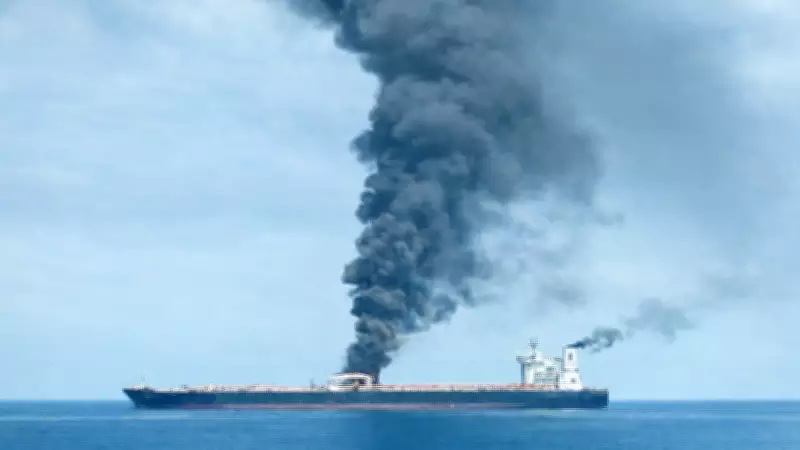
US Military Destroys Iranian Frigate in Indian Ocean Near Sri Lankan Waters
In a dramatic escalation of regional hostilities, a major Iranian warship that had recently participated in a multinational naval review hosted by India now rests on the ocean floor. The vessel, identified as the IRIS Dena, was sunk approximately 40 nautical miles south of Galle, Sri Lanka, in the early hours of March 4, 2026.
Distress Call and Swift Sinking
The incident began when the Iranian frigate issued a distress signal at around 5:30 AM local time. Initial reports suggested a possible maritime accident, prompting immediate search and rescue operations off the coast of Sri Lanka. However, the situation rapidly transformed into a significant military confrontation.
Within hours of the sinking, US officials confirmed to Reuters news agency that American forces had conducted a deliberate strike that destroyed the Iranian vessel. This revelation turned what appeared to be a rescue mission into a clear act of military aggression in international waters.

Regional Conflict Reaches Indian Ocean
The destruction of the Iranian frigate marks a critical expansion of the ongoing conflict involving Iran, bringing hostilities directly to the strategic waters of the Indian Ocean. This development proves how rapidly what has been described as a regional upheaval can spill over to affect neighboring countries and vital maritime routes.
The sinking occurred perilously close to both Sri Lankan and Indian territorial waters, raising serious concerns about regional stability and maritime security. Just weeks prior to its destruction, the same Iranian warship had been welcomed as part of international naval exercises in India, highlighting the sudden and dramatic shift in regional dynamics.
Strategic Implications and Regional Concerns
The incident carries multiple significant implications:
- Direct US Military Action: The confirmed American strike represents a clear escalation in US involvement in regional conflicts
- Maritime Security Threats: The attack occurred in busy shipping lanes crucial for international trade
- Regional Power Dynamics: The proximity to both Indian and Sri Lankan waters creates complex diplomatic challenges
- Conflict Expansion: Demonstrates how localized conflicts can rapidly affect broader regions
This development underscores the volatile nature of current geopolitical tensions and their potential to disrupt stability in strategically important regions like the Indian Ocean, which serves as a vital corridor for global commerce and energy transportation.