

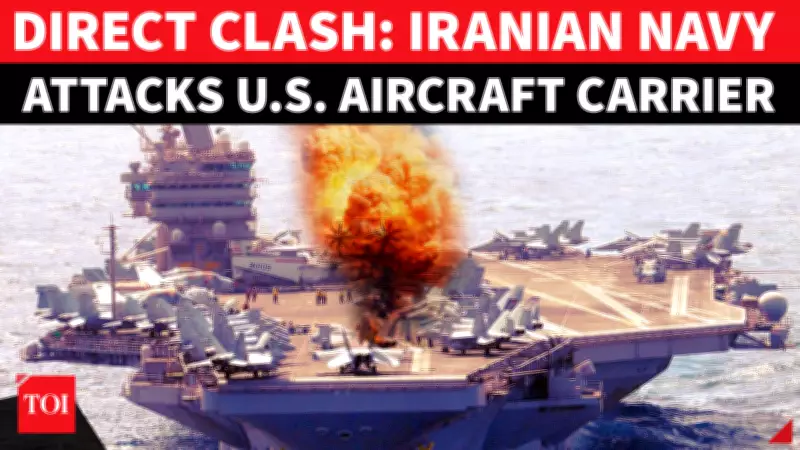
US Navy Helicopter Attacks Iranian Ship in Arabian Sea Confrontation
In a dramatic escalation of hostilities, United States naval forces engaged and struck an Iranian vessel in the Arabian Sea after it sailed perilously close to the USS Abraham Lincoln carrier strike group. The incident, which occurred on March 13, 2026, marks a significant and direct military clash between the two nations amid an already volatile regional conflict.
Sequence of the Naval Engagement
The confrontation began when the Iranian ship maneuvered into what US officials deemed a dangerous proximity to the USS Abraham Lincoln and its accompanying warships. In response, a US Navy warship initially attempted to target the vessel using its Mark-45 deck gun. However, this initial defensive measure reportedly missed its mark, failing to neutralize the threat.
Following the unsuccessful gunfire, the US forces escalated their response by launching an armed helicopter from the carrier group. The helicopter then fired two precision-guided Hellfire missiles, which successfully struck the Iranian ship. As of the latest reports, the status of the vessel and its crew remains unknown, with no immediate confirmation on casualties or the extent of damage inflicted.

Broader Context of Rising US-Iran Tensions
This direct naval clash occurs against a backdrop of intensifying military and diplomatic friction between the United States and Iran. The region is currently witnessing heightened instability, with two US aircraft carriers now deployed in the Middle East, underscoring the strategic importance and escalating nature of the conflict.
The Arabian Sea and surrounding maritime routes are critical global chokepoints for oil and trade, making any military activity here a matter of international concern. This incident threatens to further destabilize an area already fraught with geopolitical rivalries and proxy conflicts.
Implications for Regional Security
The exchange of fire represents a tangible shift from posturing to active engagement, raising fears of a broader regional war. Analysts warn that such confrontations could prompt retaliatory measures from Iran, potentially targeting US assets or allies in the Gulf region.
With both nations maintaining a firm stance, the risk of miscalculation or further escalation remains high, potentially drawing in other regional actors and impacting global energy markets. The international community is closely monitoring developments, urging restraint to prevent a full-scale conflict.
This incident highlights the fragile security environment in the Middle East, where longstanding tensions have now manifested in direct military action, challenging diplomatic efforts and peace initiatives.






