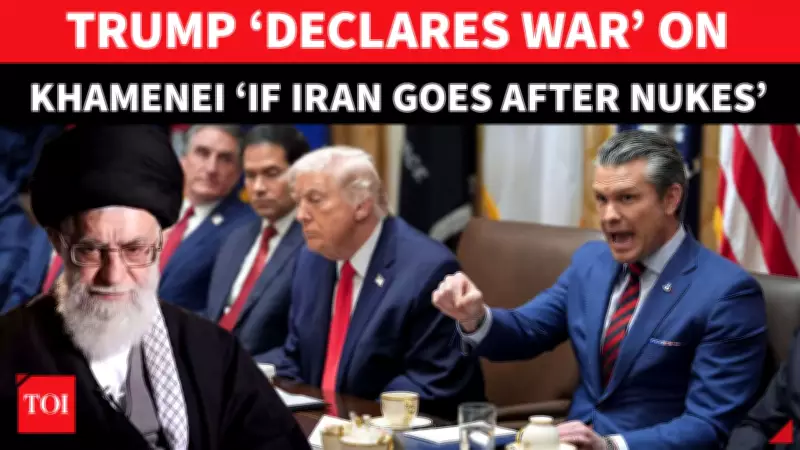
In a significant escalation of rhetoric, the Trump administration has issued a chilling warning to Iran regarding its nuclear ambitions, with Defense Secretary Pete Hegseth declaring that the United States is prepared to employ "all options"—including potential military force—to thwart Tehran's pursuit of nuclear weapons. This stark message was delivered during a high-profile Cabinet meeting, where President Donald Trump emphasized a robust U.S. military presence advancing toward the region and called on Iran to engage in negotiations, cautioning that time is running out if diplomatic efforts falter.
Hegseth's Direct Warning to Iranian Leadership
Speaking alongside President Trump, Defense Secretary Pete Hegseth made it unequivocally clear that the Pentagon stands ready to execute any orders aimed at halting Iran's nuclear program. He stressed that while the door for a diplomatic resolution remains open, Washington will not hesitate to act decisively to prevent Iran from acquiring nuclear capabilities. This warning comes amid heightened tensions, with Hegseth's words serving as a direct caution to Iranian Supreme Leader Ali Khamenei and other top officials.
Iran's Defiant Response and Diplomatic Stance
In response to the U.S. threats, Iran has reacted with defiance, asserting that it will resist any potential attack while simultaneously expressing openness to a fair nuclear deal. Iranian officials have reiterated their commitment to defending national sovereignty, even as they signal willingness to negotiate under equitable terms. This dual stance highlights the complex dynamics at play, with Iran balancing military preparedness against diplomatic overtures.

Trump's Call for Negotiations Amid Military Posturing
President Trump has underscored the urgency for Iran to "come to the table" and engage in serious talks, warning that failure to do so could lead to dire consequences. He has pointed to the increasing U.S. military presence in the Middle East as a demonstration of Washington's resolve, urging Tehran to seize the opportunity for dialogue before options narrow. This approach reflects a strategy of combining pressure with diplomatic incentives, though the looming threat of confrontation casts a shadow over the region.
Escalating Tensions and Regional Implications
As tensions between the United States and Iran escalate, the possibility of a military confrontation looms large over the Middle East, raising concerns about stability and security in the area. The situation is further complicated by regional allies and adversaries watching closely, with potential ripple effects on global geopolitics. Analysts warn that any miscalculation or provocation could trigger a broader conflict, making the current diplomatic window critical for de-escalation.
Key Points to Note:
- Defense Secretary Hegseth's warning emphasizes the U.S. readiness to use military force if necessary to prevent Iran's nuclear weapons development.
- President Trump is pushing for diplomatic negotiations while reinforcing military capabilities in the region as a deterrent.
- Iran maintains a stance of resistance against attacks but remains open to a fair nuclear agreement, adding layers to the ongoing standoff.
- The escalating tensions heighten risks of conflict in the Middle East, with implications for international relations and security.
This development marks a pivotal moment in U.S.-Iran relations, as both sides navigate a precarious balance between confrontation and diplomacy, with the stakes involving nuclear proliferation and regional peace.