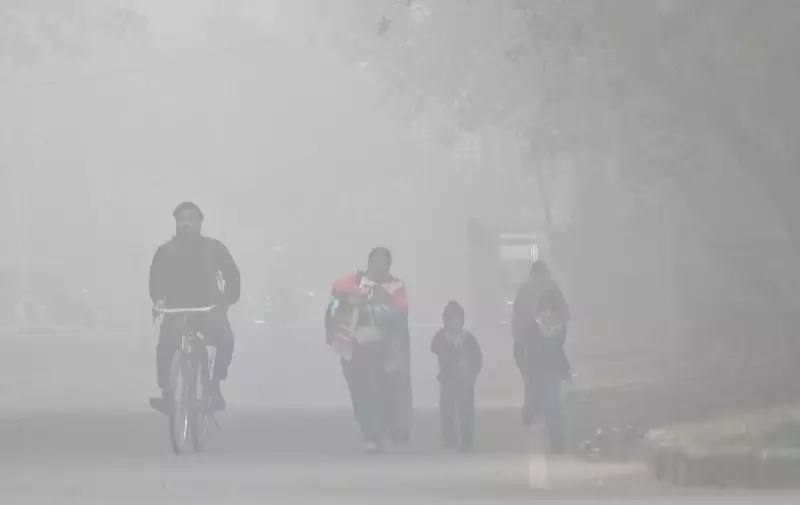
A thick blanket of dense fog descended upon the Tricity region of Chandigarh, Panchkula, and Mohali on Tuesday morning, severely disrupting normal life and transport services. The India Meteorological Department (IMD) has issued an alert, warning residents that the challenging conditions with very low visibility are likely to persist for the next 48 hours.
IMD Sounds Alarm for Prolonged Foggy Conditions
The local meteorological office has explicitly forecast dense to very dense fog across the Union Territory and its adjoining areas for both Tuesday and Wednesday. The minimum temperature recorded in Chandigarh was 6.8 degrees Celsius, which is close to the season's average, but the high humidity levels combined with calm winds created the perfect recipe for the fog formation. Weather officials have advised citizens to exercise caution while commuting.
The visibility dropped dramatically, creating hazardous conditions for all forms of travel. At the Chandigarh International Airport, the situation led to significant operational challenges, impacting flight schedules for numerous passengers.

Transport Grinds to a Halt: Flights and Trains Disrupted
The fog's immediate and most visible impact was on the region's transportation network. At the airport, several flights were affected due to the dangerously low visibility. A SpiceJet flight scheduled to depart for Hyderabad was delayed, causing a ripple effect on subsequent travel plans. Incoming flights were also not spared, with disruptions reported across the board.
The railway services faced similar hurdles. The poor visibility forced trains to reduce speed considerably, leading to widespread delays. Commuters and long-distance travelers alike found their plans thrown into disarray as the fog showed no signs of lifting through the morning hours.
Road Safety Becomes a Major Concern
On the roads, the situation was equally perilous. The dense fog drastically reduced visibility for drivers, increasing the risk of accidents. Major highways and city roads witnessed slow-moving traffic as vehicles navigated cautiously with hazard lights on. Authorities urged motorists to avoid high speeds, use fog lights, and maintain safe distances from other vehicles.
Residents of the Tricity woke up to an eerily quiet and obscured landscape, with familiar landmarks disappearing into the grey mist. The fog persisted well into the late morning, delaying daily routines for school-goers, office commuters, and vendors.
Looking Ahead: Weather Patterns and Precautions
While the IMD's alert is active for two days, the intensity of the fog is expected to vary. The combination of low temperatures, high moisture levels, and minimal wind speed is the primary cause of this weather phenomenon, typical for North Indian winters but more intense in this instance.
Citizens are advised to monitor official weather updates closely. When venturing out, wearing warm clothing is essential, and if visibility is extremely poor, it is safer to delay non-essential travel. The administration and disaster management teams are likely to remain on standby to address any emergencies arising from the continued foggy conditions.
This spell of dense fog serves as a stark reminder of winter's grip on the northern plains, bringing with it a unique set of challenges that test the resilience of urban infrastructure and the adaptability of daily life.