A new wave of environmental literature is moving beyond stark warnings and scientific data to ask deeper, more unsettling questions about history, power, and our place in the world. For readers in 2025, a selection of five profound books offers a crucial lens to understand the climate emergency not just as a scientific problem, but as a crisis of values, attention, and responsibility. These works collectively challenge the notion of human exceptionalism and explore how inequality, empire, and modern ideologies have fundamentally reshaped the Earth.
From Environmental History to Lyrical Meditations
This compelling body of work refuses to treat nature as a passive backdrop. Instead, it traces the intricate links between today's ecological upheavals and historical forces like capitalism, imperialism, and industrial extraction. The books recover older, often marginalized ways of seeing the living world, suggesting that addressing the climate crisis requires a radical reimagining of our relationship with rivers, forests, and the very concept of life itself.
1. The Burning Earth: A Sweeping 500-Year History
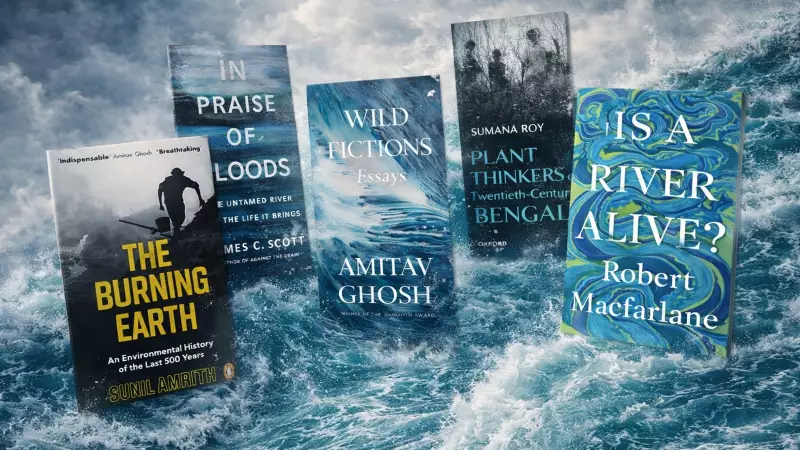
In The Burning Earth, An Environmental History of the last 500 years, historian Sunil Amrith presents a tour de force. Framing climate change as a direct outcome of inequality—both between humans and nature, and among human societies—Amrith connects contemporary ecological disasters to the enduring legacies of capitalism, imperialism, and the industrial revolution. Drawing on a staggering array of interdisciplinary sources, the book argues that "the planet is shaped by the sheer amazing force of human want." It is a foundational text that combines geographical sweep with meticulous detail.

2. Is a River Alive? Challenging Human Utility
Author Robert MacFarlane embarks on a global quest in Is a River Alive, part travelogue and part political treatise. Visiting aquifers from Ecuador to South India and Quebec, MacFarlane argues against the reduction of rivers to mere water repositories for human use. He revitalizes the forgotten idea that rivers possess personality and agency. The core contention is powerful: if we accept a river is alive, human exceptionalism must give way to a society that is far more attentive and empathetic to nature's ways.
3. Plant Thinkers of 20th Century Bengal: A Vegetal Worldview
Sumana Roy's Plant Thinkers of 20th Century Bengal introduces readers to a unique intellectual tradition. The book reveals how giants like Jagadish Chandra Bose, Rabindranath Tagore, and Satyajit Ray saw the vegetal world—forests, gardens, trees—not as a muse but as caring friends demanding empathy. Roy also highlights lesser-known thinkers, such as Maya mashi, a Bangladeshi refugee whose plant-centric annotations as a domestic helper deeply influenced the author. Roy posits that these sensitivities anticipated modern debates on ecology and environmental ethics.
4. Wild Fictions: Inequality and the Ecological Crisis
In his essay collection Wild Fictions, Amitav Ghosh consolidates his position as a major moral voice. Traversing his career-long examination of how societies relate to the environment, Ghosh explores the contemporary ecological crisis through the experiences of migrants, tribal communities, and academics. He draws sharp attention to the myriad forms of inequality—between communities, humans and nature, and conflicting worldviews. The essays collectively question the certitudes of Eurocentric modernity and its role in the planetary emergency.
5. In Praise of Floods: A Life-Affirming Force
The posthumously published work In Praise of Floods and the Life It Brings by social scientist James C. Scott is a powerful argument against anthropocentric river management. Set along Myanmar's Ayeyarwady River, Scott reframes floods not as disasters but as life-affirming forces that rejuvenate soil, boost biodiversity, and benefit riverine communities. It is a plea to "lend an ear to birds, reptiles, amphibians, crustaceans" and to appreciate the ecological wisdom of marshes, tributaries, and wetlands.

A Collective Call for a New Paradigm
Read together, these five essential books for 2025 form a compelling narrative. They move the conversation on environment and climate change from mere data points to a profound interrogation of history, power, and imagination. They insist that solving the climate emergency requires dismantling the ideologies of human mastery and recovering a sense of kinship with the living, breathing planet we inhabit. This is not just a reading list; it is a toolkit for rethinking our future.