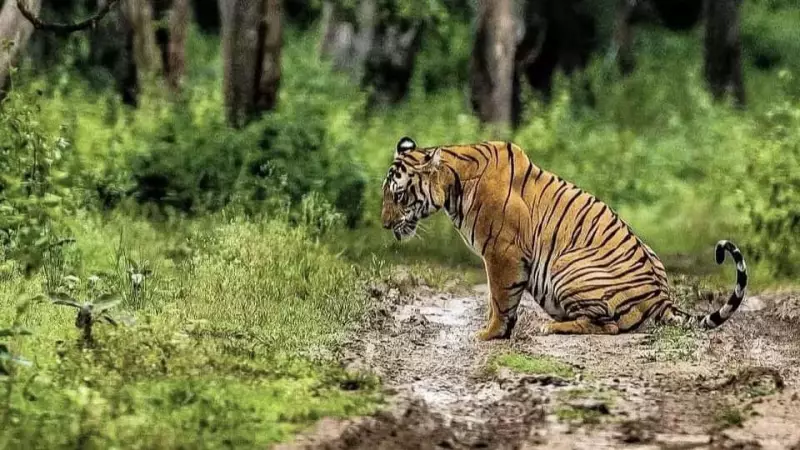
In a landmark achievement for wildlife conservation in Bihar, the tiger population at the Valmiki Tiger Reserve (VTR) has witnessed an extraordinary surge, multiplying more than seven times over a span of twelve years. Official data reveals a dramatic climb from a mere eight big cats in 2010 to a thriving population of 54 in the latest census conducted in 2022.
A Steady Climb to Success
The growth narrative of VTR, Bihar's sole national park and the country's 18th tiger reserve established in 1990, is one of consistent progress. Forest records chart a steady increase: from 8 tigers in 2010 to 28 in 2014, then 31 in 2018, culminating at 54 in 2022. Forest authorities are optimistic, estimating that the ongoing census could potentially push the number close to 70, marking a new high for the reserve.
Nestled in West Champaran district, the reserve boasts a core area of 909.86 square kilometres. It shares an extensive, nearly 100-kilometre-long forest boundary with Nepal's famed Chitwan National Park and maintains a tenuous link with Uttar Pradesh's Sohagibarwa Wildlife Sanctuary. The Gandak and Masan rivers flow through its terrain, which has a perimeter of about 150 km. The human-wildlife interface is significant, with approximately 120 villages located on its fringes and nearly 350 more within the sensitive zone.

The Pillars of Conservation: Habitat and Security
Attributing this remarkable recovery to dedicated efforts, West Champaran Forest Conservator and Director Neshamani K highlighted the twin strategies of habitat improvement and robust protection. "It is due to the highest standard of habitat management that the number of tigers in VTR has increased," he stated. This management focus has directly led to the expansion of grasslands within the reserve.
"The earlier grassland was made in 1,400 hectares in VTR, but now the area of grassland has been increased to 2,400 hectares," Neshamani K explained. This expansion created a domino effect, boosting the populations of herbivores like deer, chital, and sambar. The abundant prey base, in turn, made food readily available for the apex predator, facilitating the tiger population boom. He added that over 35 other animal species have also benefitted from these improved conditions.
A Multi-Layered Security Blanket
On the security front, a multi-pronged approach has been instrumental in safeguarding the reserve's wildlife. A dedicated Special Tiger Protection Force has been constituted to strengthen the security apparatus. Furthermore, more than 600 local youths have been engaged as tiger trackers and deployed in anti-poaching camps, creating both employment and community stake in conservation.
Eco-development committees have been formed in every village surrounding the reserve to foster cooperation in forest protection. For enhanced mobility and monitoring, especially during the challenging monsoon season, four trained elephants have been brought from Karnataka for patrolling duties. The collaborative efforts of the Sashastra Seema Bal (SSB), forest guards, and veterinarians have collectively created a safer environment for wildlife to flourish.
"The increase in VTR’s tiger count indicates a friendly wildlife environment and a healthy forest," Neshamani K affirmed, pledging to continue the work to ensure the positive trend endures. This success story of the Valmiki Tiger Reserve stands as a testament to what sustained, science-backed conservation efforts can achieve, offering a blueprint for tiger recovery across other landscapes.