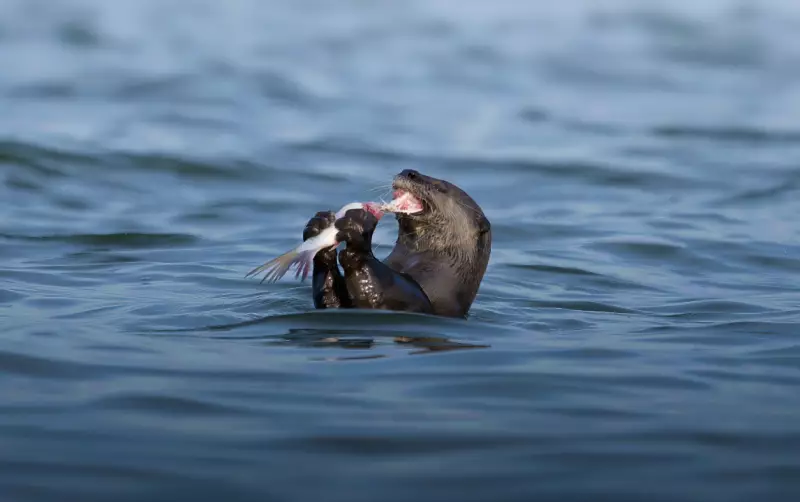
In the serene backwaters of Tamil Nadu's Cauvery delta, a playful yet tense drama unfolds each morning. Local fishermen from Anaikarai village have nicknamed the smooth-coated otters 'meenakutty' or 'fishing puppies' for their mischievous habit of sneaking up and stealing the day's catch. This charming interaction, however, masks a deepening struggle for survival between humans and one of Asia's largest otter species, now listed as vulnerable.
Forest Department's Four-Stage Conservation Blueprint
Responding to this escalating conflict and the species' declining numbers, the Tamil Nadu Department of Forests has unveiled a dedicated conservation initiative. On March 28, during a state assembly session, the department announced several programmes for endangered species, including a targeted project for smooth-coated otters in the Thanjavur, Thiruvarur, and Cuddalore districts of the delta region.
The project, titled 'Conservation initiative to study the population dynamics, behavioural pattern, and habitat improvement of smooth-coated otters', has received administrative approval and funding. As per a July government order, the project is allocated Rs. 20 lakh, with Rs. 10 lakh already disbursed for the 2025-26 financial year.

Additional Chief Secretary for Environment, Climate Change and Forests, Supriya Sahu, outlined the four-stage plan. "The final stage will involve habitat restoration and conflict reduction strategies at certain locations. Based on the study’s results, we will strengthen conservation efforts including habitat management, community involvement, and ongoing research and monitoring," she stated.
Understanding the Meenakutty: Ecology and Conflict
Smooth-coated otters (Lutrogale perspicillata) are social creatures, hunting in groups called 'bevvies' of 4 to 12. One such group can consume up to a tonne of fish annually, playing a crucial role as apex predators in maintaining aquatic ecosystem balance. They are vital indicators of wetland health. In the Cauvery delta, they navigate sluggish tributaries, irrigation channels, and mangrove edges, living in earthen burrows called holts.
However, their existence is under severe threat. "Safeguarding otters safeguards our freshwater systems and their diversity. Their presence signals healthy wetlands," emphasizes Sathiskumar Rajendran, founder of the Endangered Wildlife and Environmental Trust (EWET), which has been conducting field surveys in the delta.
The threats are multifaceted:
- Upstream dams reducing fish populations.
- Agricultural pesticide runoff contaminating their prey.
- Plastic pollution in waterways causing deaths.
- Direct conflict with fishermen over dwindling resources.
Fisherman C Karthik, 36, from Anaikarai, describes the conflict vividly: "These meenakutty suddenly emerge on the surface and snatch our fish. They then float on their backs and eat fish with their paws like shawarma." While fascinated by them, Karthik notes the tension increases when water levels drop. "Sometimes otters get tangled in fishing nets and are injured. At times, they claw through our nets and destroy them and devour our catch."
Research and Hope for Coexistence
The research will be spearheaded by the forest department's Advanced Institute for Wildlife Conservation (AIWC) in Chennai, conducted through the Department of Wildlife Biology at AVC Autonomous College in Mayiladuthurai. Scientists will spend a year surveying otter groups across the three districts using methods like direct observation, faecal sample analysis, and environmental DNA sampling.
The otter's protected status underscores the urgency. It is listed as vulnerable on the IUCN Red List and is protected under Schedule I of India's Wildlife Protection Act, 1972, affording it the highest level of legal protection. Despite this, sightings have become rare outside protected zones, signaling a sharp population decline.

The conservation project aims to reverse this trend by first assessing the population and mapping critical habitats. It will then study the root causes of human-otter conflict before implementing practical solutions like planting reeds and building fish ladders to improve habitats. The ultimate goal is a blueprint for coexistence, where the playful meenakutty can thrive alongside the communities of the Cauvery delta, ensuring the health of the region's precious freshwater ecosystems for generations to come.
Otter Facts:
- Grow to about 1 meter from nose to tail and weigh roughly 10 kg.
- Have distinctive dark brown, smooth fur on top and creamy fur underneath.
- Are skilled hunters with partly webbed feet and sharp claws.