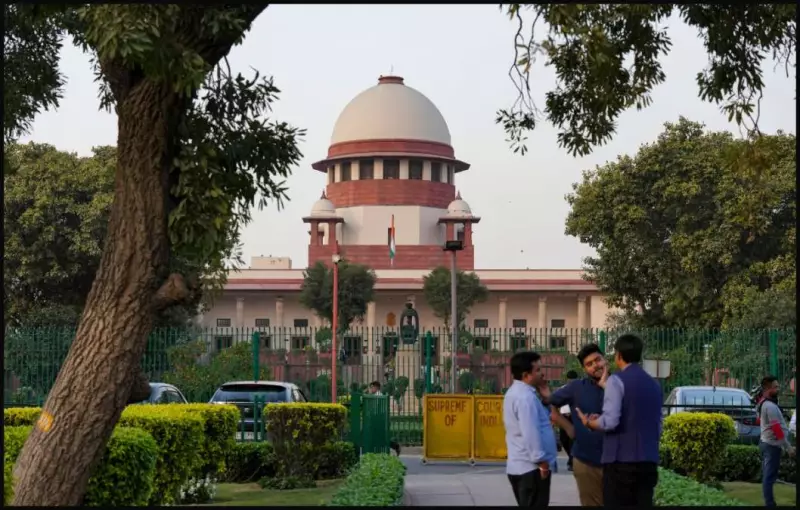
The Supreme Court of India delivered a sharp rebuke to the Commission for Air Quality Management (CAQM) on Monday, expressing deep dissatisfaction with its handling of the severe air pollution crisis in the National Capital Region. The apex court emphasized that merely monitoring pollution levels is insufficient and demanded the identification of specific, actionable causes.
Bench Demands Concrete Action, Not Just Data
A bench comprising Justices Sanjay Kishan Kaul and Sudhanshu Dhulia heard the matter concerning the deteriorating air quality in Delhi. The justices pointedly questioned the efficacy of the CAQM, the specialized body tasked with coordinating air pollution management in the region. The court's primary contention was that the commission was focusing on presenting data rather than pinpointing the exact sources and providing a clear roadmap for mitigation.
The bench stated that the CAQM must move beyond stating the obvious—that pollution is high—and instead work on identifying the precise contributors and their proportions. This includes differentiating between pollution from local sources like vehicles and construction dust, and external factors such as stubble burning in neighboring states. The court underscored that effective policy-making and enforcement hinge on this granular understanding.

Focus on Stubble Burning and Long-Term Strategy
During the hearing, the discussion prominently featured the recurring issue of stubble burning, a major seasonal contributor to Delhi's smog. The Supreme Court questioned the measures taken by the governments of Punjab, Haryana, Rajasthan, and Uttar Pradesh to curb this practice. The bench sought concrete details on the steps implemented and their outcomes, moving away from generic assurances.
Furthermore, the court highlighted the need for a proactive, long-term strategy rather than reactive, emergency-based measures that are deployed only when the Air Quality Index (AQI) reaches severe levels. It called for a sustainable, year-round action plan that addresses all perennial sources of pollution to prevent the annual public health emergency.
Implications and Next Steps
The Supreme Court's stern remarks place significant pressure on the CAQM and the concerned state governments to elevate their response to the pollution crisis. The directive is clear: shift from being a data-collecting agency to a problem-solving authority. The court has essentially mandated a root-cause analysis followed by targeted, source-specific interventions.
The next hearing in the case is scheduled for January 10, 2026, by which time the commission and states are expected to present more substantive action-taken reports. This judicial push aims to instill accountability and ensure that the health of Delhi's residents is protected through decisive and scientific governance, not just bureaucratic monitoring.