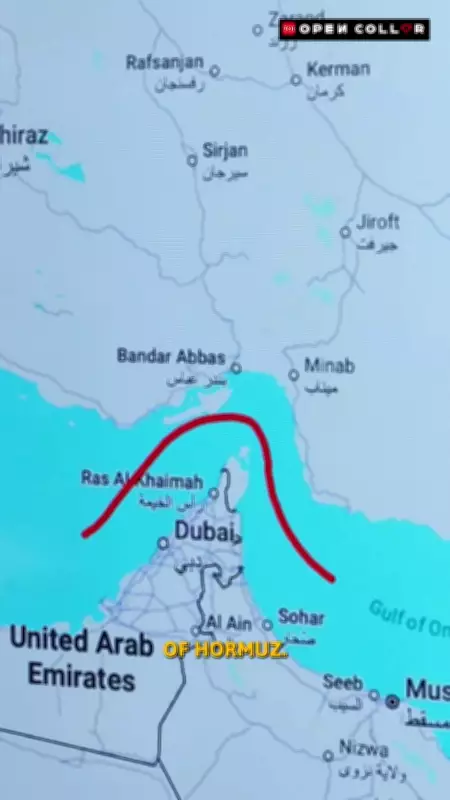
Strait of Hormuz Crisis: Iran's Strategic Control Threatens Global Oil Supply
In a detailed analysis by Major Gaurav Arya on OPEN COLLAR, the escalating crisis at the Strait of Hormuz has been broken down to reveal its profound implications for the world economy. The Strait of Hormuz stands as the planet's most critical maritime oil route, responsible for transporting nearly 20% of the global energy supply. This narrow waterway, situated between Iran and Oman, serves as a lifeline for oil exports from major producers in the Middle East, including Saudi Arabia, Iraq, and the United Arab Emirates.
Iran's Military Dominance and Its Global Impact
Iran has been progressively tightening its control over the Strait of Hormuz through a combination of advanced military assets, including missiles, drones, and naval mines. This strategic move allows Iran to potentially disrupt or block the flow of oil, leveraging its geographical advantage to exert pressure on international markets. According to Major Gaurav Arya, such actions could trigger a dramatic surge in oil prices, potentially escalating from the current levels around $100 per barrel to as high as $200 per barrel.
The implications of this price spike are far-reaching, as it could lead to increased costs for transportation, manufacturing, and everyday consumer goods worldwide, thereby shaking the foundations of the global economy. The crisis highlights the delicate balance of power in the region and underscores how geopolitical tensions can directly influence economic stability on a global scale.

Strategic Masterstroke or Major Miscalculation?
A critical question raised in the analysis is whether Iran's aggressive posture represents a strategic masterstroke or a significant miscalculation, particularly in the context of former U.S. President Donald Trump's policies. Under Trump's administration, tensions with Iran escalated, including the withdrawal from the Iran nuclear deal and the imposition of stringent sanctions. These actions may have prompted Iran to adopt a more confrontational stance, using the Strait of Hormuz as a bargaining chip in international diplomacy.
Major Gaurav Arya suggests that Iran's control over the strait could be seen as a calculated move to gain leverage in negotiations and assert its regional influence. However, it also carries the risk of backfiring, potentially leading to military conflicts or further economic isolation. The analysis delves into how this crisis could reshape global alliances and energy policies, forcing countries to reconsider their dependence on Middle Eastern oil and accelerate investments in alternative energy sources.
Potential Outcomes and Global Economic Ramifications
The potential outcomes of the Strait of Hormuz crisis are multifaceted. If Iran successfully disrupts oil shipments, it could lead to:
- Sharp increases in global oil prices, affecting everything from gasoline costs to inflation rates.
- Economic instability in oil-importing nations, particularly in Europe and Asia, which rely heavily on Middle Eastern oil.
- Heightened geopolitical tensions, possibly triggering military responses from the United States or other global powers.
- Accelerated shifts towards renewable energy as countries seek to reduce their vulnerability to such chokepoints.
Major Gaurav Arya's analysis emphasizes that understanding this crisis is crucial for grasping how interconnected global security and economic systems are. The Strait of Hormuz serves as a stark reminder of how a single geographic location can hold the world hostage, influencing everything from daily commutes to international diplomacy.