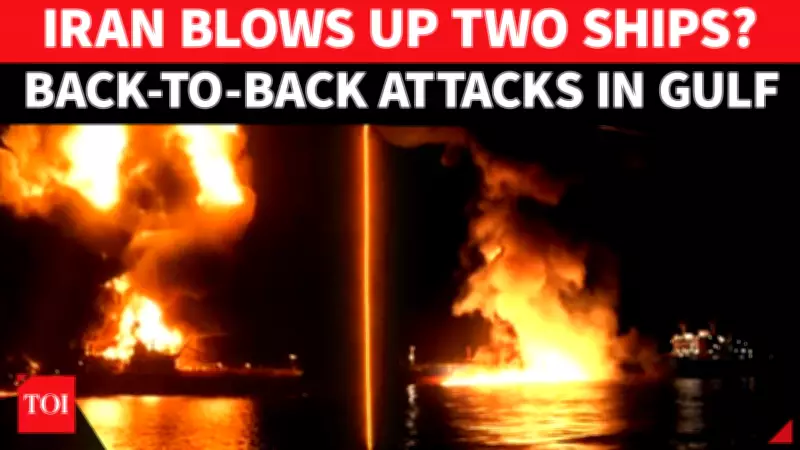
Second Commercial Vessel Targeted in Gulf Waters as Iran Intensifies Retaliatory Campaign
In a dangerous escalation of regional tensions, a second commercial ship has been struck by an unidentified projectile in the strategic waters of the Gulf, mere hours after Iran launched missile attacks on critical energy infrastructure. The latest incident occurred just 4 nautical miles off the coast of Ras Laffan Industrial City in Qatar, one of the world's most vital energy export hubs.
Details of the Maritime Attack and Immediate Aftermath
The United Kingdom Maritime Trade Operations (UKMTO) officially confirmed the strike on the vessel, reporting that all crew members aboard are safe despite the attack. However, this security incident has triggered immediate alarm across international shipping lanes and energy markets, given the location's global significance. Ras Laffan serves as Qatar's primary liquefied natural gas (LNG) export terminal, handling massive volumes of energy resources destined for markets worldwide.
This maritime strike follows directly on the heels of confirmed Iranian missile attacks targeting Ras Laffan's industrial facilities earlier the same day. QatarEnergy, the state-owned energy corporation, acknowledged "extensive damage" and fires at the site, though full assessments are ongoing. The timing and proximity strongly suggest these events are coordinated elements of a broader Iranian offensive campaign.

Qatar's Diplomatic Response and Regional Fallout
The Qatari government has condemned the strikes as a "brazen" and unacceptable threat to its national security and economic sovereignty. In a significant diplomatic move, Qatar has expelled Iranian diplomats from its territory, signaling a sharp deterioration in bilateral relations that could have lasting regional consequences. This expulsion marks one of the most direct confrontations between the two nations in recent years.
This attack represents the second vessel targeted on March 19 alone. Earlier, another ship was hit near the port of Khawr Fakkan, where a fire broke out onboard, requiring emergency response. The back-to-back maritime incidents indicate a deliberate strategy to expand the conflict zone into vital international shipping routes, particularly those transiting the Strait of Hormuz—a chokepoint for approximately one-fifth of the world's oil shipments.
Broader Context of Iranian Retaliation and Regional Security
Iranian officials have explicitly framed these attacks as retaliation for what they claim was an Israeli-American strike on the Pars gas facility. The Islamic Revolutionary Guard Corps (IRGC) has issued multiple warnings about further strikes if what they perceive as provocations continue. This escalation follows a pattern of increased Iranian military activity across the region, with threats also directed toward NATO territories and US allies.
The international community, particularly energy-importing nations and maritime insurers, is closely monitoring the situation. Any sustained disruption to shipping through the Gulf could have immediate effects on global energy prices and supply chains. Security analysts warn that the conflict's expansion into commercial maritime routes represents a dangerous new phase with potential for miscalculation and broader regional confrontation.
As diplomatic channels strain and military posturing intensifies, the security of one of the world's most critical economic waterways hangs in precarious balance. The coming days will likely see increased naval patrols, heightened security advisories for commercial shipping, and urgent diplomatic efforts to prevent further escalation that could destabilize global energy markets.