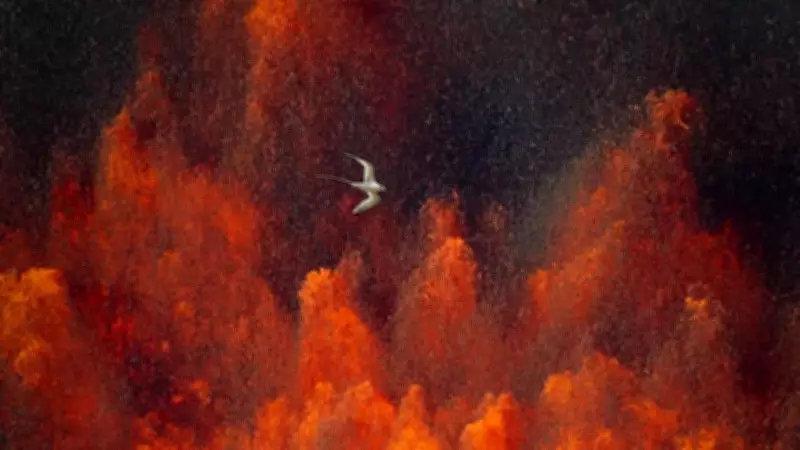
White-Tailed Tropicbird Soars Over Hawaiian Lava Fountain in Stunning Video
High above a burst of molten lava, a lone seabird glides silently through the smoky Hawaiian sky. Underneath it, glowing fountains of lava shoot up from the Earth in a violent display of volcanic power. This incredible scene, where the serene beauty of a bird in flight meets the raw force of nature, was captured in a video posted by photographer Tom Kualii on Instagram.
Capturing the Moment: Bird and Lava in Harmony
In the video, a Koaʻe Kea bird, also known as the white-tailed tropicbird, flies directly over an active lava fountain during a volcanic eruption in Hawaiʻi. The bird's white color and long tail feathers create a luminous appearance as it passes over the glowing eruption, offering a treat for the eyes and a stark contrast to the fiery backdrop. This visual spectacle highlights the delicate balance between wildlife and the dynamic volcanic landscapes of the Hawaiian Islands.
Adaptation of Hawaiian Wildlife to Volcanic Activity
Before concerns arise about the bird's wellbeing, it is important to note that wildlife in the Hawaiian Islands has long adapted to environments shaped by volcanic activity. Species have evolved over the years to live with natural eruptions, lava flows, and terrain changes. The white-tailed tropicbird, identifiable by its narrow wings and long tail feathers, spends most of its time flying over the vast Pacific Ocean, traversing great distances before landing on cliffs and islands. This adaptation allows it to navigate such hazardous settings with apparent ease.

Understanding Lava Fountains and Volcanic Eruptions
The eruption featured in the video produced what scientists call a lava fountain, one of the most spectacular forms of volcanic activity. A lava fountain occurs when gas bubbles in rising magma are suddenly released in a violent explosion from a volcanic vent. Pressure builds beneath the surface, shooting molten rock up in brilliant orange streams that can reach hundreds of meters high. Such eruptions are frequently associated with Kīlauea, one of the most active volcanoes on Earth, located in Hawaiʻi Volcanoes National Park. Kīlauea has significantly contributed to the formation of Hawaiian geography by constantly adding land as lava cools and solidifies.
Ecological Rejuvenation and the Balance of Nature
While volcanic explosions demonstrate the dynamic nature of the Earth, they are also essential for ecosystem rejuvenation. Over time, plants begin to grow on cooled lava plains, and birds return to the skies. The image of the Koaʻe Kea gliding calmly above a fountain of molten rock captures this ongoing cycle of destruction and renewal. In a landscape forged by fire, life continues to move forward, often in the quiet, effortless flight of a seabird soaring above the flames, a sight that has captured the interest of wildlife lovers worldwide.