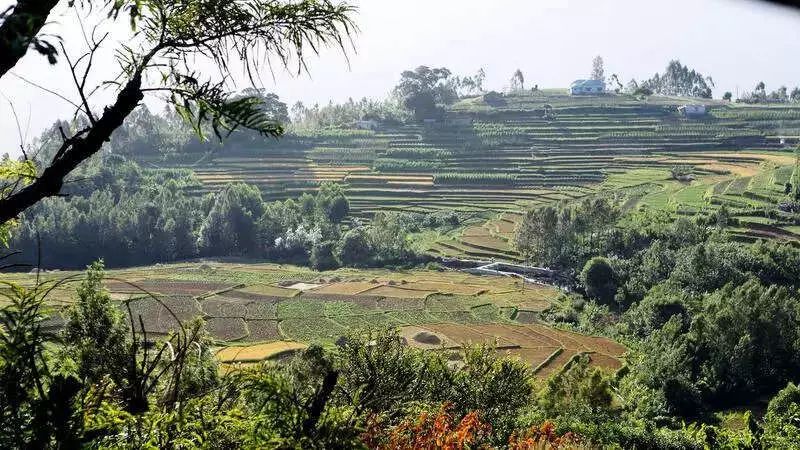
In a landmark move with far-reaching implications, the Supreme Court's directive to form a high-powered expert committee to re-examine the definition of the Aravalli Range has cast a stark light on the existential threats faced by India's other ancient mountain systems, particularly the Western Ghats. The court's focus on conserving one of the world's oldest mountains underscores a national crisis: the relentless pressure of anthropogenic activities on fragile ecosystems.
Beyond Definition: A Call for Protection, Not Exploitation
Experts across the board are emphasizing that the process of defining what constitutes hills and mountain ranges must be driven by the imperative of protection, not by the intention to open them up for mineral mining. This comes amid serious questions about the central government's concurrent claims of increasing forest cover while admitting to the diversion of forest land for various development projects.
There is a unanimous admission that the explosive growth of linear infrastructure—roads, railways, and power lines—poses the single biggest challenge to these landscapes, leading to severe threats for the unique fauna and flora that call them home. Non-governmental organizations are rallying for greater public awareness, championing the use of scientific reports to safeguard ecologically sensitive zones.

The Infrastructure Boom and its Ecological Cost
Wildlife scientist Sanjay Gubbi presented a stark assessment of the current scenario. "We urgently need to clearly zone landscapes where development is prioritised and where conservation must take precedence," he stated. He pointed out that India is currently on an aggressive infrastructure spree, frequently sidelining the long-term ecological costs of destroying nature. "Infrastructure and land-use therefore need far stronger regulation," Gubbi asserted.
He specified that ecologically critical areas—including high-elevation forests, riparian zones, and large contiguous forest blocks—must be declared no-go zones for mining, large dams, unplanned tourism, and other projects with irreversible impacts. Gubbi also highlighted the need for improved governance and institutional coordination, noting that different agencies often work at cross-purposes, undermining conservation efforts.
Ecological Literacy and Democratic Challenges
Echoing the urgency, Rajendra Kerkar, coordinator of the Goa Foundation, warned of an alarming rise in infrastructure development within the Western Ghats. "No attention is given to the ecological sensitivity of the area. There is a need to create ecological literacy among the public by various communities. With ecological literacy, people will take proactive steps for the protection of mountains," Kerkar explained.
The problem, however, extends beyond ecology into the realm of governance and democracy. Experts revealed that in states like Kerala, quarrying is rampant in impoverished regions. This has ceased to be merely an ecological issue; it has become a democratic crisis, where the mining lobby undermines the process by funding political parties. "As long as the funding continues, it is difficult to find a solution to the issue," an expert noted, adding that tribal lands are frequently acquired for quarrying purposes, compounding social injustice.
The Supreme Court's intervention for the Aravallis has thus ignited a crucial national conversation. It underscores the immediate need for a paradigm shift—from viewing mountains as resources to be exploited to recognizing them as non-negotiable natural heritage requiring stringent, science-based protection and informed public stewardship.