Saudi Arabia Issues Official Call for Shawwal Crescent Moon Sighting to Mark Eid ul Fitr 2026
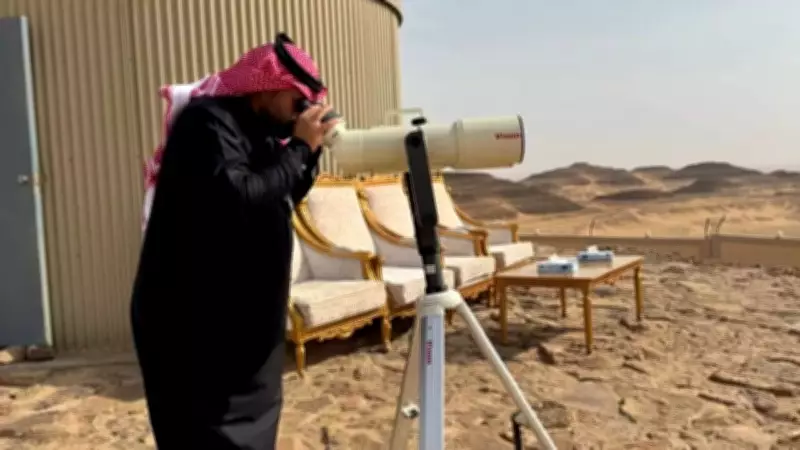
As the holy month of Ramadan 2026 approaches its conclusion, Muslims worldwide are eagerly anticipating the pivotal moment of sighting the Shawwal crescent moon, which heralds the beginning of Eid ul Fitr celebrations. In a significant announcement, authorities in Saudi Arabia have officially called upon Muslims across the kingdom to observe the evening sky on Wednesday, March 18, 2026, to locate the new moon that will determine the exact date for the festive occasion.
Supreme Court of Saudi Arabia Directs Moon Observation Efforts
The Supreme Court of Saudi Arabia has specifically requested that Muslims throughout the kingdom actively search for the crescent moon of Shawwal on the evening of Wednesday, March 18, 2026. This date corresponds to the 29th day of Ramadan in the Islamic lunar calendar. Should the crescent be successfully sighted, the following day, March 19, will officially commence as the first day of Eid ul Fitr, a festival that celebrates the culmination of a month dedicated to fasting, prayer, and spiritual introspection.
The court has further emphasized that any individual who spots the crescent moon, whether through the naked eye or with the aid of binoculars, must promptly report their observation to the nearest judicial court. This reporting mechanism is essential for facilitating an official announcement, thereby upholding a centuries-old tradition that remains integral to establishing the Islamic calendar. Unlike the solar-based Gregorian calendar, the Islamic system relies entirely on lunar cycles, making moon sightings a critical practice.

Eid Date Hinges on Lunar Visibility and Global Implications
The sighting of the Shawwal crescent moon directly dictates the onset of the Islamic month of Shawwal and, consequently, the date of Eid ul Fitr. If the crescent becomes visible on March 18, Eid celebrations in Saudi Arabia are projected to commence on Thursday, March 19, 2026. Conversely, if the moon remains unseen that evening, Ramadan will extend to its full 30 days, shifting Eid to Friday, March 20, 2026.
Astronomical forecasts indicate that the moon may pose visibility challenges on the evening of March 18, suggesting that the festival could potentially begin on March 20 in numerous regions across the Arab world. Nevertheless, the definitive decision will only be confirmed after official moon-sighting committees meticulously verify reports from observers stationed throughout the kingdom.
This announcement from Saudi Arabia holds profound global significance, as many Muslim communities internationally look to the kingdom's moon-sighting declaration to synchronize their Eid festivities. Nations in the Gulf region, including the United Arab Emirates, Qatar, and Kuwait, frequently align their Eid dates with Saudi Arabia's official pronouncement. In contrast, countries in South Asia, such as India, Pakistan, and Bangladesh, typically celebrate Eid a day later, relying on local moon sightings or distinct lunar visibility conditions.
Central Role of Moon Sighting in Islamic Traditions
Diverging from the solar Gregorian calendar, the Islamic calendar is wholly based on lunar cycles, with each month initiating upon the visual confirmation of the new crescent moon after sunset. Given that lunar months span either 29 or 30 days, Islamic holidays progressively shift earlier each year within the Gregorian framework. The evening dedicated to moon sighting is widely recognized as Chand Raat, a time characterized by family gatherings, extended market hours, and fervent preparations for the forthcoming Eid celebrations.
Across Saudi Arabia and the broader Muslim world, preparations for Eid ul Fitr are already in full swing. Markets are experiencing a notable surge in shoppers purchasing new attire, confectioneries, and gifts, while mosques are organizing special Eid prayers scheduled for the early morning of Shawwal's first day.

Eid ul Fitr 2026: A Festival of Faith and Community
Eid ul Fitr, translating to "festival of breaking the fast," signifies the end of Ramadan and stands as one of Islam's most paramount celebrations. The day traditionally begins with congregational prayers, followed by intimate family reunions, lavish festive meals, and the practice of Zakat al-Fitr, a form of charity designed to ensure that individuals in need can also partake in the joyous occasion.
Presently, Muslims in Saudi Arabia and beyond await the moment when the slender crescent graces the evening sky. This sighting will not only signal the conclusion of Ramadan but also inaugurate a day of jubilation for over a billion Muslims globally. Until the official announcement is made, anticipation continues to mount as communities gaze toward the horizon, hopeful to catch a glimpse of the crescent that will herald the arrival of Eid ul Fitr 2026.