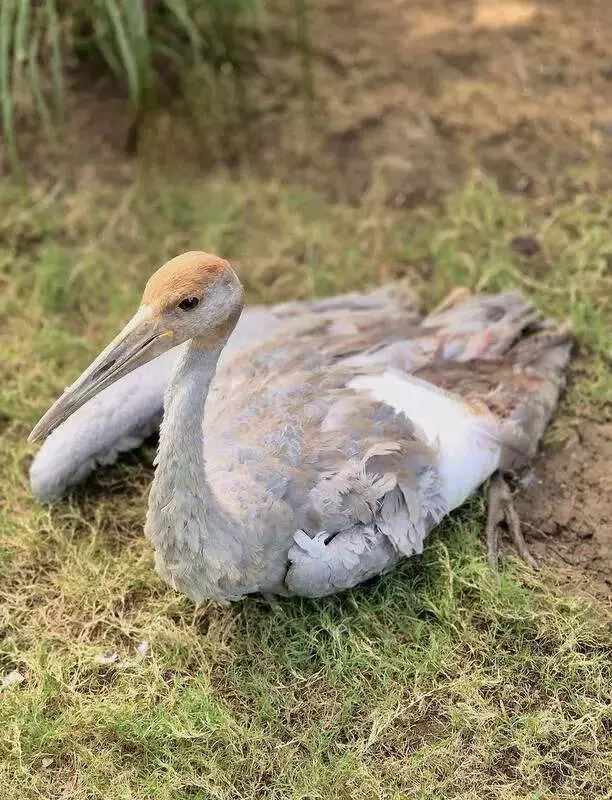
A young sarus crane, celebrated as the tallest flying bird in the world, met a tragic end in Surat on Tuesday after being fatally wounded by a sharp kite string, known as manja. The incident underscores the persistent and lethal threat posed by these threads to urban wildlife.
A Fatal Flight and a Desperate Rescue
The doomed bird was flying with a flock near Bonand village, close to Kharwasa, when disaster struck. Residents witnessed the crane suddenly falter and fall from the sky on Monday evening. Acting swiftly, they rushed to secure the injured bird before stray dogs could attack it.
Lakshman Chaudhary, a local, played a key role. "My staff and I located it immediately and brought it to my farm," Chaudhary recounted. He explained that they first removed the entangled, razor-sharp thread and then alerted professional rescue volunteers.

Chaudhary noted that the bird, part of a flock of five, managed to walk after landing, possibly cushioned by bushes. However, the damage was already severe. "The thread cut on the wing was deep and critical," he added.
Battle to Save the Bird Ends in Loss
The rescued crane was estimated to be about one year old. It was immediately treated by volunteers from Prayas Team Environment. Despite their efforts, the bird's condition deteriorated rapidly due to the nature of its injury.
Darshan Desai, a volunteer with the team, detailed the fatal wound. "The cut was deep, and a blood vessel was damaged, leading to heavy blood loss. Such profound loss can prove fatal despite efforts to save the bird," Desai stated. The crane ultimately died on Tuesday.
Experts pointed out that beyond the physical trauma and massive blood loss, extreme stress is also a major life-threatening factor for birds in such situations, complicating recovery efforts.
A Pattern of Peril and a Glimmer of Hope
This is not an isolated case. In a strikingly similar incident just a day earlier, on Monday, an owl in Pardi, Valsad, was found entangled in kite manja, left hanging from a roof for hours. Fortunately, timely intervention by volunteers led to a successful rescue, and the owl survived.
The death of the sarus crane, however, paints a grimmer picture. Based on its age, appearance, and the composition of the flock, experts believe the young crane was likely flying with its family unit when the deadly thread severed its wing tendon, leading to a tragic end for a protected and majestic species.
These consecutive incidents serve as a stark reminder of the ecological cost of illegal or careless kite-flying practices, urging authorities and the public to seek safer alternatives.