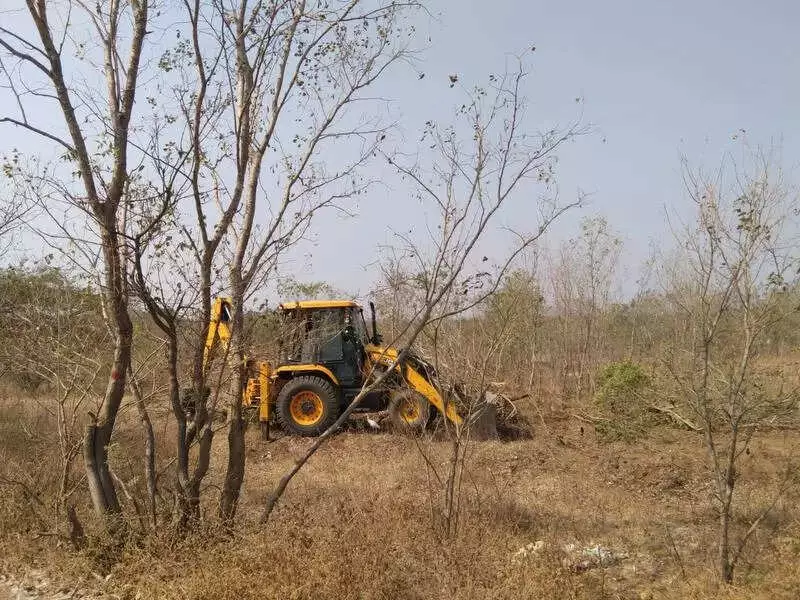
Residents of Balgavde village in Sangli's Tasgaon tehsil are locked in a bitter conflict with authorities over the clearing of a nine-hectare government land parcel for a solar power project. The work, which involves cutting down thousands of trees that have grown over 15 years, is being carried out under the state's Mukhyamantri Saur Krushi Vahini Yojana 2.0.
Broken Promises and Rising Anger
The dispute intensified after the government transferred the land to the state power utility, Mahavitaran, for the project. The scheme aims to establish decentralised solar projects within a 5-10 km radius of agricultural lands, generating between 0.5MW to 25MW of power for daytime supply to farmers. This particular initiative in Balgavde is planned to start with a capacity of around 5MW.
Villagers had earlier staged an indefinite hunger strike against the project. They called it off only after elected representatives assured them the solar farm would be relocated. However, this promise remains unfulfilled, deepening the community's distrust. The gram panchayat even passed a formal resolution opposing the tree felling, highlighting that the trees were nurtured with care on what was considered grazing land.

Discrepancy in Numbers and Community Concerns
Ravindra Shinde, a village resident and convenor of the forum opposing the tree cutting, detailed the escalating situation. "Initially, permission was granted to cut 555 trees," he said. "We objected, stating the number was over 10,000. A subsequent forest department survey then authorised the felling of 5,759 trees. On the ground, we estimate nearly 70% have already been cut. A mini-forest that developed here over 15 years is being destroyed."
The villagers' frustration peaked in July when authorities informed them that a No-Objection Certificate (NOC) from the village panchayat was not required for the project. The community's resolution listed multiple grievances: the project threatens access to grazing lands, affects a playground developed by local youth for physical training, and results in the loss of the cherished tree cover.
Official Response and Legal Recourse
The forest department permitted the tree felling on the condition that an equal number of trees would be planted elsewhere. When contacted, Tasgaon tehsildar Atul Patole explained the administration's position. "The villagers did suggest an alternative land site," he stated. "However, that proposed land falls under the forest department's jurisdiction, and various rules prevent it from being used for such projects."
With the clearing work progressing rapidly, the residents of Balgavde feel time is running out. They are now planning to approach the National Green Tribunal (NGT) for an urgent hearing. However, they fear that by the time the tribunal admits the matter, the tree felling will be completed, rendering their plea ineffective. The standoff underscores the complex trade-offs between renewable energy goals and local environmental conservation in rural India.