Russia's Quiet Rise Amid Middle East Turmoil
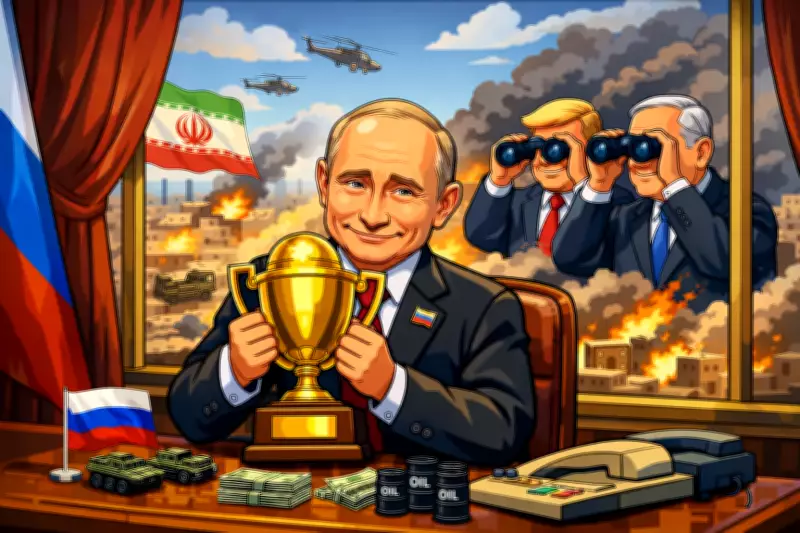
The ancient wisdom of Sun Tzu, who wrote "The supreme art of war is to subdue the enemy without fighting," appears to be finding modern application in the volatile geopolitics of the Middle East. While global attention remains fixed on escalating hostilities between the United States, Israel, and Iran, another power has been quietly positioning itself to emerge stronger from the chaos: Russia.
The Escalating Conflict and Russia's Diplomatic Positioning
Tensions reached a critical point on February 28, 2026, when joint United States-Israel strikes targeted Iranian nuclear and military facilities, reportedly killing top leadership including Supreme Leader Ali Khamenei. Since then, the conflict has continued to intensify, with Iran responding by targeting key energy facilities across the Gulf region and launching attacks on Tel Aviv.
While US President Donald Trump advances Operation Epic Fury and Israeli Prime Minister Benjamin Netanyahu unleashes 'Lion's Roar' against Iran, Russia has maintained a calculated distance from direct combat. Moscow condemned the initial US-Israeli strikes as "preplanned and unprovoked acts of armed aggression" against a sovereign UN member state, calling for immediate de-escalation and diplomatic solutions.

Reports have suggested Russia may have shared intelligence with Tehran regarding US military assets in the region, though these claims remain unverified. What's clearer is Moscow's strategic positioning to benefit from a conflict it didn't initiate.
Energy Markets: Russia's Financial Windfall
One of Russia's most significant advantages emerges from global energy markets. When Iran escalated the conflict by targeting refineries and gas sites in Saudi Arabia, Qatar, and Kuwait, Brent crude surged to $114 per barrel as fears mounted over supply disruptions. The Strait of Hormuz, which carries approximately one-fifth of global oil supply, became a focal point of instability.
Ben McWilliams, an affiliate fellow at Brussels-based think tank Bruegel, noted that current energy market conditions represent "extremely good news for Russia, especially when it comes to crude oil." Data from the Centre for Research on Energy and Clean Air reveals Russia earned about €492 million daily from fossil fuel exports in February 2026, a 7% increase from January.
With traditional Gulf supply routes disrupted, countries are increasingly turning to alternative sources. Russia's energy exports, which largely bypass the Strait of Hormuz through Baltic, Black, and Pacific routes to major Asian economies like China and India, have become more attractive despite ongoing sanctions.
Strategic Distraction: Ukraine's Diminishing Priority
Ukrainian President Volodymyr Zelenskyy has raised alarms about Russia exploiting Middle East tensions to advance its agenda in Europe. "Russia will try to exploit the war in the Middle East to cause even greater destruction here in Europe, in Ukraine," Zelenskyy warned following another wave of Russian drone and missile attacks.
The shifting global focus presents a significant challenge for Ukraine. As the United States deepens its military commitment in the Middle East, deploying critical assets like Patriot air-defense systems to protect Gulf allies, Ukraine risks slipping down the priority list. These same high-end defense systems are already in limited supply and now face competing demand from multiple theaters.
European officials have noted that peace talks between Kyiv and Moscow have entered a "danger zone" of stagnation, with follow-up negotiations postponed amid Middle East escalation. Kremlin spokesperson Dmitry Peskov acknowledged the pause, stating "The Americans have other priorities."
The Bigger Picture: Russia's Multi-Faceted Advantage
EU foreign policy chief Kaja Kallas observed that global attention is increasingly shifting toward the Middle East, with diplomatic and military resources following. This redirection creates multiple benefits for Russia:

- Financial Boost: Higher oil prices provide Moscow with additional fiscal space, potentially allowing delayed budget decisions and sustained defense spending
- Strategic Breathing Room: With fewer resources flowing to Ukraine, Russia gains operational flexibility to maintain pressure through relatively low-cost attacks
- Diplomatic Leverage: Moscow has signaled readiness to rebuild energy ties with Europe under favorable conditions, highlighting its continued relevance in global markets
- Geopolitical Positioning: While other powers bear the costs of direct conflict, Russia expands influence through calculated diplomacy and strategic patience
Sergey Vakulenko, senior fellow at the Carnegie Russia Eurasia Centre, summarized the situation: "When a good fifth of global oil supply and roughly a quarter of seaborne trade is disrupted, that's a boon for Russia."
The emerging reality suggests Russia is gaining both financial strength and strategic advantage from a conflict it has avoided entering directly. As tensions continue to reshape the Middle East, Moscow appears positioned to emerge stronger while other nations bear the immediate costs of confrontation.