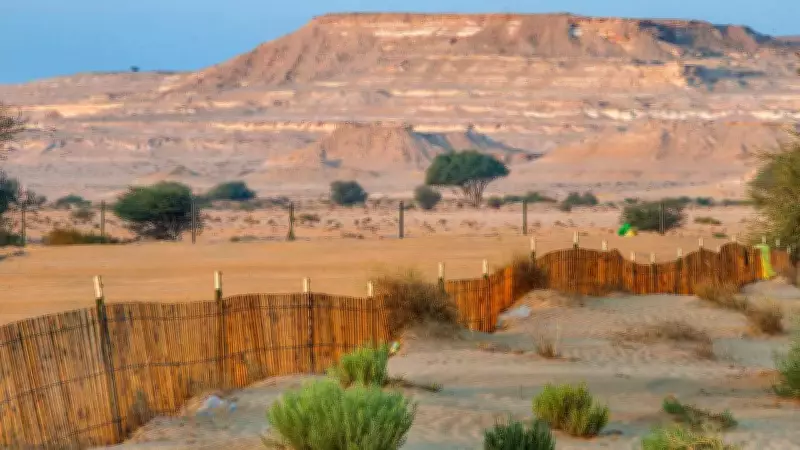
Qatar's Unique Forest-Free Reality: A Desert Nation's Environmental Story
When contemplating the world's natural landscapes, lush forests often dominate our imagination. These vital ecosystems cover approximately one-third of Earth's land surface and play a crucial role in maintaining global ecological balance. However, not every nation is blessed with these verdant expanses. A particularly striking example is Qatar, a compact Middle Eastern country renowned for its expansive deserts rather than green landscapes.
The Environmental Factors Preventing Forest Growth in Qatar
The primary explanation for Qatar's complete absence of natural forests lies in its extreme desert climate. The country receives exceptionally low annual rainfall, typically measuring below 100 millimeters. Forests require consistent precipitation and nutrient-rich soil to support dense tree growth—conditions fundamentally unavailable in Qatar's arid environment.
Another critical factor is the intense heat that characterizes Qatar's climate. Summer temperatures frequently soar beyond 40 degrees Celsius, creating hostile conditions for most tree species that typically thrive in forest ecosystems. The combination of extreme heat and minimal rainfall creates an environment where forest development is naturally impossible.

Soil composition presents a third major obstacle. Qatar's terrain consists predominantly of sandy expanses and rocky plains—geological features that cannot support the deep, fertile soil layers necessary for forest growth. The country's natural landscape is instead dominated by sand dunes, limestone outcrops, and sparse desert vegetation adapted to survive with minimal water.
Qatar's Geographical Profile and Desert Ecosystem
Situated on the northeastern Arabian Peninsula and bordered on three sides by the Persian Gulf, Qatar presents a mostly flat desert topography. The landscape features:
- Extensive sand dune systems
- Vast gravel plains
- Limestone rock formations
- Sparse desert vegetation including drought-resistant shrubs
Coastal regions support specialized ecosystems like salt-tolerant vegetation and mangrove forests that provide crucial habitats for migratory birds and marine life. However, these areas lack the dense tree canopy characteristic of true forests.
Innovative Greening Strategies in a Forest-Free Nation
Despite the absence of natural forests, Qatar has implemented remarkable environmental initiatives to increase greenery throughout the country. The nation has developed sophisticated approaches to urban and environmental greening that include:
- Strategic planting of drought-resistant tree species like acacia and ghaf trees that require minimal water compared to traditional forest species
- Advanced irrigation systems utilizing treated wastewater to sustain vegetation in rainfall-scarce regions
- Comprehensive urban greening projects that transform cityscapes with sustainable vegetation
These technological solutions demonstrate how nations can adapt to environmental limitations through innovation and strategic planning.
Wildlife Adaptation in Qatar's Desert Environment
Contrary to perceptions of deserts as barren wastelands, Qatar supports a diverse array of wildlife that has evolved specialized adaptations for desert survival. The country's ecosystems host numerous species including:
- Arabian gazelles and desert foxes
- Various reptile species adapted to extreme temperatures
- Resident and migratory bird populations, particularly in coastal wetlands
- Specialized desert flora that thrives in low-water conditions
These organisms demonstrate nature's remarkable capacity for adaptation to even the most challenging environments.
Environmental Challenges and Sustainability Initiatives
Like other arid region nations, Qatar faces significant environmental challenges including water scarcity, climate change impacts, and desertification. Limited freshwater resources have historically constrained agricultural development and vegetation cultivation.
To address these challenges, Qatar has invested substantially in green technology infrastructure:

- Large-scale desalination plants to produce freshwater
- Renewable energy projects to reduce environmental impact
- Comprehensive recycling and waste management systems
- Environmental awareness campaigns promoting conservation
These efforts reflect Qatar's commitment to balancing development with environmental stewardship in its unique desert context.
A Landscape Shaped by Climate and Adaptation
Qatar's forest-free reality serves as a powerful case study in how climate and geography fundamentally shape natural environments. While forests dominate many global regions, desert ecosystems like Qatar's demonstrate alternative models of environmental adaptation and resilience.
The Qatari landscape—forged by extreme weather, water scarcity, and millennia of natural evolution—represents a unique environmental paradigm. As the nation continues developing innovative sustainability approaches, it provides valuable insights into how countries can work with, rather than against, their natural environmental constraints to create livable, green spaces even in the world's most challenging climates.