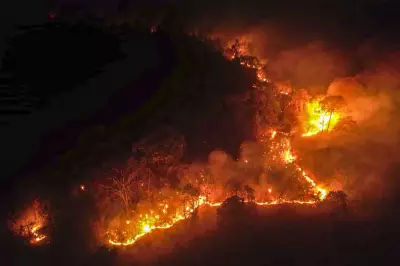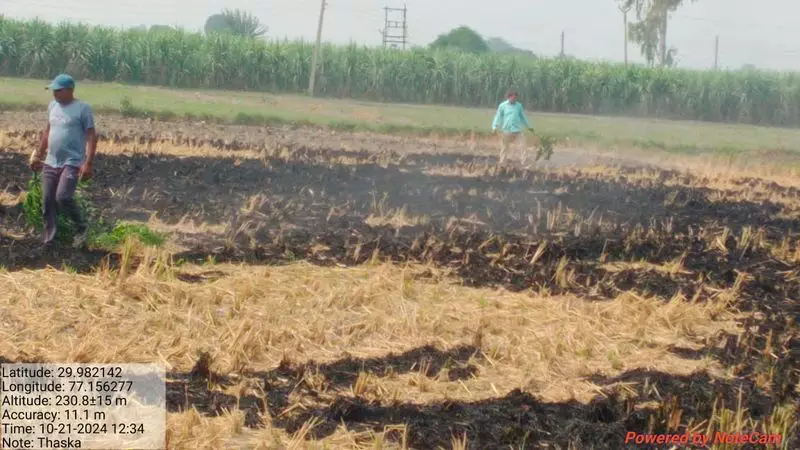
In a significant environmental turnaround, the state of Punjab has recorded a sharp decline in the number of farm fire incidents during the recent paddy harvesting season. Official data reveals a 53% reduction in stubble burning cases compared to the previous year, marking a major victory for pollution control efforts in North India.
Sharp Decline in Fire Counts
According to the detailed report, Punjab witnessed a total of 19,463 farm fire incidents from September 15 to November 30 this year. This figure stands in stark contrast to the 41,687 incidents recorded during the same period in the previous year, 2022. The data, compiled by the Punjab Remote Sensing Centre in Ludhiana, indicates a concerted and successful effort to curb the practice of burning paddy straw.
The decline was not uniform but showed a consistent downward trend. In the year 2021, the state had reported 71,304 such fires, making this year's tally the lowest in recent history. This positive trend is attributed to a multi-pronged strategy implemented by the state government and adopted by the farming community.

Government Initiatives and Farmer Cooperation
The substantial drop is largely credited to proactive measures taken by the Punjab government. A key initiative has been the aggressive promotion of in-situ management of paddy straw, which involves decomposing the residue in the fields themselves using machinery like Super Seeders and Happy Seeders. The government provided significant subsidies to make these machines accessible to farmers.
Furthermore, a massive awareness campaign highlighted the detrimental effects of stubble burning on soil health and the broader environment. The government also enforced existing regulations more strictly, with field teams monitoring hotspots. The cooperation from farmers, who are increasingly recognizing the long-term benefits of alternative methods, has been pivotal to this success.
District-Wide Performance and Future Goals
An analysis of district-level data shows that most regions contributed to the overall reduction. Districts that were traditionally high in farm fire incidents showed considerable improvement. However, officials acknowledge that the work is not complete. The goal remains to bring the number of stubble burning events down to zero, a target that requires continuous effort, technological support, and economic incentives for farmers.
This reduction in Punjab has direct positive implications for air quality across the Indo-Gangetic plains, particularly for the National Capital Region (NCR), which grapples with severe smog every winter. Fewer farm fires mean less particulate matter and pollutants being released into the atmosphere, leading to cleaner air.
The success story from Punjab sets a benchmark for other agrarian states facing similar challenges. It demonstrates that with political will, farmer engagement, and the right technology, it is possible to address the complex issue of crop residue burning. The focus now shifts to sustaining this momentum in the coming years and exploring more avenues for the profitable utilization of paddy straw.