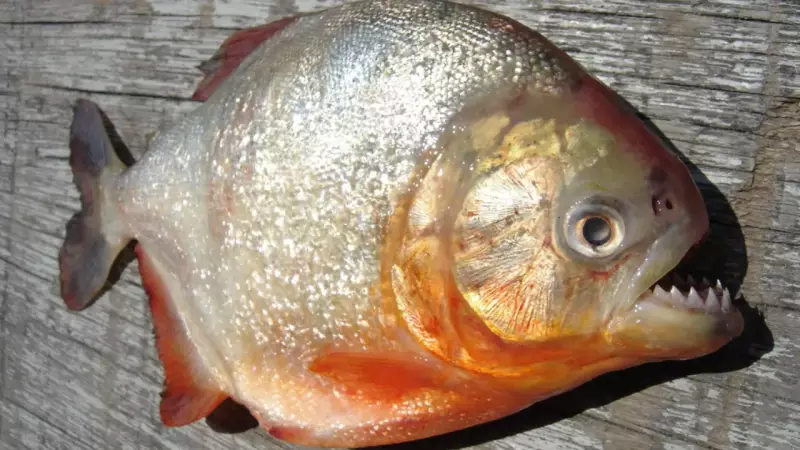
For decades, piranhas have been portrayed as the ultimate freshwater terrors of the Amazon, a reputation cemented by Hollywood. However, the reality of these fascinating fish is far more complex and intriguing than their fearsome stereotype suggests. Originating from the Amazon Basin and other South American freshwater sources, piranhas are not the indiscriminate killers of legend but sophisticated creatures with a crucial role in their environment.
The Anatomy of an Efficient Hunter
What makes piranhas such effective predators is a combination of specialized physical traits and social intelligence. Their most famous feature is their set of hundreds of sharp, triangular teeth, arranged in a single row. These teeth act as perfect cutting blades for meat and are continuously replaced throughout the fish's life, ensuring they are always ready for action.
Despite rarely growing longer than two feet, a piranha's bite is astonishingly powerful, capable of crushing bone. This immense force allows them to shred meat within seconds when necessary. Furthermore, piranhas are highly social, swimming in coordinated schools. This shoaling behaviour is not just for hunting efficiency; it involves complex communication through body language, indicating a level of social intelligence often overlooked.

Diet, Senses, and Ecological Role
Contrary to popular belief, piranhas are not strictly carnivorous. They are opportunistic omnivores. Their diet can include insects, smaller fish, fruits, seeds, and vegetation, depending on what is available in their river habitat. This adaptability is key to their survival.
Their hunting prowess is enhanced by advanced senses. Piranhas can detect the slightest vibrations and traces of blood in the water, allowing for fast and precise attacks. This "instant attack" response is not random but is triggered by specific stimuli like competition for food or distress signals. Ecologically, they serve as vital natural cleaners. By feeding on sick, weak, or dead animals, they help prevent the spread of disease in water bodies, maintaining the health of their freshwater ecosystems.
Reproduction and Protecting the Next Generation
The behaviour of piranhas during breeding season offers another glimpse into their complex nature. They lay eggs in shallow waters, and adult piranhas exhibit strong protective behaviour around the nest. This instinct to guard their offspring ensures a higher survival rate for the young and highlights their drive to conserve the next generation. It is during this period that they are most territorial and aggressive, adding a layer to their ferocity that is rooted in parental care rather than mindless aggression.
In conclusion, piranhas are much more than their razor-toothed caricature. Fatal attacks on humans are exceptionally rare, and most species only bite when threatened, fighting for food, or defending territory. They are intelligent, socially complex, and ecologically indispensable predators. Their study offers valuable insights into predator-prey relationships and the delicate balance of freshwater ecosystems, reminding us that nature's most feared creatures are often its most misunderstood.