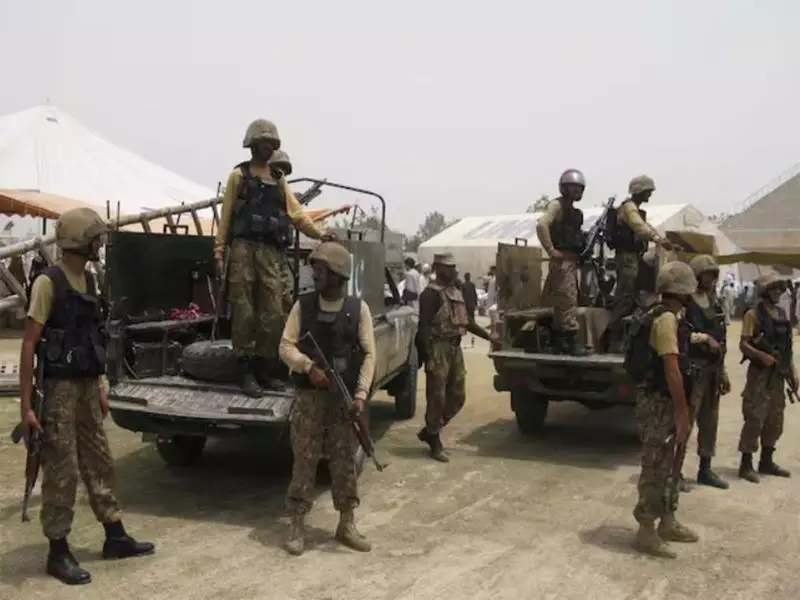
Pashtun National Jirga Sounds Alarm Over Alleged Forced Evictions in Tirah Valley
The Pashtun National Jirga, a traditional assembly representing Pashtun communities, has issued a stark warning regarding alleged forced evictions in the Tirah Valley of Pakistan. According to recent reports, the Jirga has formally accused authorities of displacing local residents without proper justification or compensation, raising fears of a severe humanitarian crisis in the region.
Details of the Allegations and Humanitarian Concerns
The Jirga's allegations center on what they describe as systematic and coercive removal of Pashtun families from their ancestral lands in Tirah Valley. This valley, located in the Khyber Pakhtunkhwa province near the Afghanistan border, is historically significant and home to numerous indigenous communities. The Jirga claims that these evictions are being carried out under the guise of security operations or development projects, but without adequate legal procedures or humanitarian safeguards.
Key concerns highlighted by the Pashtun National Jirga include:

- Lack of due process in the eviction proceedings, with reports of minimal or no notice given to affected families.
- Insufficient or nonexistent compensation for displaced individuals, leading to economic hardship and loss of livelihood.
- Potential violations of human rights, including the right to shelter and property, as enshrined in international conventions.
- The risk of escalating tensions and social unrest in an already volatile region, which could exacerbate existing conflicts.
Warnings of an Impending Humanitarian Crisis
In its statements, the Pashtun National Jirga has emphasized that the forced evictions could trigger a full-blown humanitarian crisis. They warn that displaced families are facing dire conditions, with limited access to basic necessities such as food, water, and medical care. The Jirga points out that the Tirah Valley's remote location and ongoing security challenges make it difficult for aid organizations to operate effectively, compounding the suffering of those affected.
The Jirga has called for immediate action to address this situation, including:
- An independent investigation into the evictions to ensure transparency and accountability.
- Urgent humanitarian assistance for displaced families, coordinated by international agencies.
- Dialogue between local communities, the Pakistani government, and relevant stakeholders to find peaceful resolutions.
- Adherence to international human rights standards in all displacement-related activities.
Broader Implications and Regional Context
This issue is not isolated but fits into a larger pattern of displacement and conflict in the Pakistan-Afghanistan border regions. The Tirah Valley has long been a flashpoint due to its strategic importance and ethnic dynamics, with Pashtun communities often caught in the crossfire of military operations and political maneuvering. The Pashtun National Jirga's allegations highlight ongoing tensions between indigenous groups and state authorities, raising questions about governance and minority rights in Pakistan.
Moreover, the warning of a humanitarian crisis comes at a time when global attention is increasingly focused on displacement issues worldwide. If unaddressed, the situation in Tirah Valley could lead to further instability, affecting not only local residents but also regional security. The Jirga's call for international intervention underscores the need for a coordinated response to prevent escalation and protect vulnerable populations.
In summary, the Pashtun National Jirga's allegations of forced evictions in Tirah Valley serve as a critical reminder of the humanitarian challenges facing conflict-affected areas. Their warnings demand urgent attention from both national and international bodies to avert a deeper crisis and uphold the rights of displaced communities.