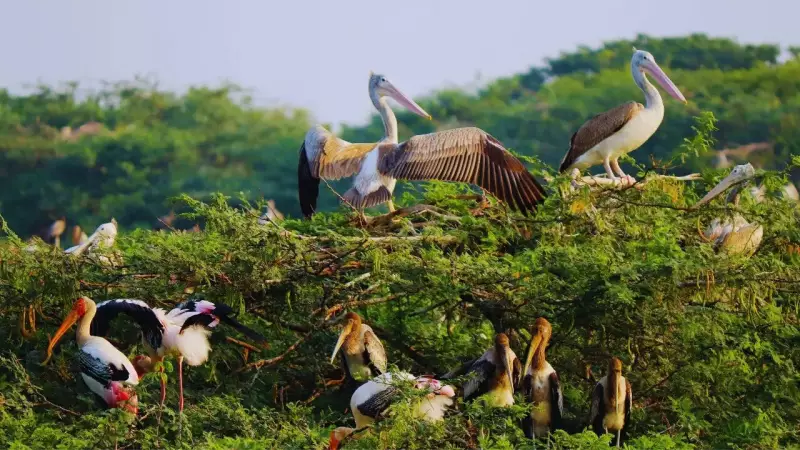
In a major boost for environmental protection, the Indian government has officially designated the Parvati-Arga Bird Sanctuary in Uttar Pradesh as an Eco-Sensitive Zone (ESZ). This strategic move aims to create a regulated buffer around the critical wetland, safeguarding it from unchecked developmental pressures.
A Shield for a Vital Wetland Ecosystem
Announcing the decision on social media platform X, the Minister of State for Environment, Forest and Climate Change, Kirti Vardhan Singh, stated that the declaration underscores the government's dual commitment to conserving ecologically significant landscapes and promoting them as responsible ecotourism hubs. He emphasized that the initiative is designed to strengthen regional biodiversity.
The sanctuary, sprawling across 1,084 hectares in the Gonda district, is a permanent freshwater wetland system featuring two oxbow lakes—Parvati Lake and Arga Lake. These lakes, formed from abandoned river channels, are characteristic of the Indo-Gangetic floodplain and support rich biological diversity.

The timing of this ESZ notification is crucial, as India's protected areas face immense strain from urbanization, infrastructure projects, pollution, and rapid land-use changes. Eco-Sensitive Zones act as regulatory "shock absorbers," mitigating the adverse impacts of surrounding development on core conservation areas.
Why Parvati-Arga is Ecologically Priceless
The sanctuary's ecological value is multifaceted. It is a Ramsar Site, a designation of international importance for wetlands. Parvati-Arga serves as a crucial wintering ground and stopover for migratory birds arriving from Central Asia and Tibet, traversing vast continental distances.
Beyond birds, wetlands like Parvati-Arga play a key role in climate resilience, groundwater recharge, and flood mitigation. The sanctuary also holds special significance for vulture conservation, providing nesting and foraging grounds for threatened species like the White-rumped vulture, Indian vulture, and the endangered Egyptian vulture.
However, the ecosystem faces challenges, including the proliferation of invasive species such as water hyacinth. The new ESZ status is expected to help manage these threats by regulating activities in the immediate vicinity.
What Does an Eco-Sensitive Zone Mean for the Area?
Notified by the Ministry of Environment, Forest and Climate Change (MoEFCC), an ESZ typically extends up to 10 kilometres from a protected area's boundary. It establishes a transition zone from areas of high ecological protection to zones with regulated human activity.
Within an ESZ, activities are categorized as prohibited, regulated, or permitted based on their environmental impact. For Parvati-Arga, this will translate into:
- Strict checks on polluting industries setting up near the sanctuary.
- Regulation of construction activities and land-use changes in surrounding areas.
- A framework to ensure the sustainable use of natural resources while prioritizing conservation.
The ultimate goal is to preserve the wetland's delicate hydrology and protect the habitats that support its diverse birdlife, ensuring the long-term health of this ecologically vital landscape.